You can beat the planning fallacy by applying smart strategies that enhance your project management. Start by reviewing historical data to inform your estimates and challenge your assumptions. Break tasks into smaller segments, and consider possible obstacles by adding buffer time. Minimize distractions to improve focus and set deadlines that create urgency. Utilize team input and data-driven insights to refine your planning process. By following these strategies, you'll find it easier to stay on track and achieve your goals. Learn how to implement these techniques effectively for even better results.
Key Takeaways
- Utilize historical performance data to create realistic timelines and avoid underestimating task durations.
- Break projects into smaller, manageable segments to enhance focus and execution efficiency.
- Include buffer time in estimates to accommodate potential setbacks and challenges.
- Minimize distractions by creating a conducive work environment and setting clear deadlines.
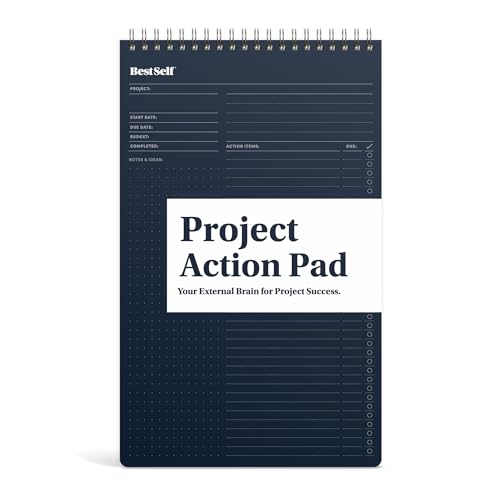
BestSelf Project Action Pad - Daily Task Planner, To-Do List & Action Pad for Boosting Productivity and Effective Project Management
𝑼𝑳𝑻𝑰𝑴𝑨𝑻𝑬 𝑻𝑨𝑺𝑲 𝑷𝑳𝑨𝑵𝑵𝑬𝑹 - Introducing the BestSelf Project Action Pad – the ultimate task planner and to-do list...
As an affiliate, we earn on qualifying purchases.
Understanding the Planning Fallacy

Recognizing the planning fallacy means understanding how our optimism can lead to underestimating the time and resources needed for tasks. You might think a project will take just a few days, but when you engage, you realize it's much more complex.
This cognitive bias can create unrealistic timelines, leaving you stressed and overwhelmed. To combat this, challenge your assumptions. Consider factors like potential obstacles and the actual time similar tasks have taken in the past.

Life Charge Hourly Planner Notepad. 60 Page Planning Pad w/Appointment Time Block, Task Log List & Note Sections. For Office Work Schedule & Time Management. 8.5 X 11, A4 Sheets.
60 Page Un-dated Daily Hourly Planner Notepad that consists of 4 vital sections. Time Blocking, Appointment Details, Tasks...
As an affiliate, we earn on qualifying purchases.
Data-Driven Decision Making Techniques

Leveraging data-driven decision-making techniques can greatly enhance your project planning accuracy and efficiency.
Start by tracking historical performance data to inform your future estimates. Consult team members or industry-specific data to gauge similar project timelines, ensuring you're setting realistic expectations.
Employ an outside view for statistical analysis, drawing insights from comparable projects. Implement predictive analytics to identify potential issues before they arise.
Use machine learning tools to optimize your scheduling and task management effectively. Gather extensive information to minimize planning errors, and analyze past successes and failures to refine your strategies.
Recognizing cognitive biases can also help you avoid skewed time estimates, leading to a more accurate planning process overall.
Embrace data to drive your decisions confidently.

Task Planner & Activity Log Notepad – 60 Page Undated Daily & Hourly Planning Pad, To-Do List, Checklist, Track Time & Tasks, ADHD Tracker – Organize Workday, Boost Productivity – 8.5 x 11 Tear Sheets Life Charge
All-in-One Task Planner & Activity Log Book. This dual-purpose notepad features a structured to-do list (Top Priority, Follow-Up,...
As an affiliate, we earn on qualifying purchases.
Realistic Time Management Approaches

Effective time management is key to executing your plans successfully, especially when you combine realistic strategies with the insights gained from data-driven decision-making.
Here are four practical approaches to enhance your time management:
- Set Deadlines: Keep deadlines close to the present to create a sense of urgency.
- Break Tasks Down: Divide larger projects into manageable 10-minute segments for better focus and execution.
- Use Three-Point Estimation: Balance optimism by estimating best-case, worst-case, and most-likely scenarios, then calculate the average for a realistic timeline.
- Delegate Tasks: Streamline your workload by delegating or automating non-essential tasks.
Implementing these strategies can help you stay on track and make your time management more effective.

The Advanced Productivity Planner – Undated Daily, Weekly & Monthly Planning System with Time Blocking, Goal Setting & Habit Tracking. Toolkit to Maximize Focus and Take Control of Your Time | A5
1️⃣ A DAILY PLANNER DESIGNED FOR FOCUS: This undated daily planner gives you space to think. Prioritize your...
As an affiliate, we earn on qualifying purchases.
Anticipating Challenges Effectively

Anticipating challenges during a project helps you prepare for unforeseen obstacles and enhances your overall planning accuracy.
Begin by acknowledging that setbacks are likely, so include buffer time—aim for around 20%—in your initial estimates.
Prioritize tasks to guarantee you focus on what's essential.
Take a moment to reflect on past projects and identify pitfalls you faced, then devise contingency plans to address similar issues. It’s important to recognize that challenges will inevitably arise, but having contingency plans in place can mitigate the impact. By learning from past mistakes and taking **personal responsibility for life change**, you can adapt and grow in your approach to future projects. This proactive mindset allows you to respond effectively to unforeseen obstacles while continually improving your processes.
Consult feedback from your team or industry to gauge potential challenges they've encountered.
Use predictive analytics or data-driven insights to foresee possible hurdles, allowing you to adjust your strategy proactively.
Overcoming Distractions and Procrastination

To boost your productivity, tackle distractions head-on and implement strategies to overcome procrastination. Here are four effective techniques you can use:
- Minimize distractions: Turn off smartphone notifications and find a quiet workspace to help you focus.
- Use the Pomodoro Technique: Work in focused sprints of 25 minutes followed by a 5-minute break to maintain mental clarity.
- Set clear deadlines: Use calendars to establish deadlines that create urgency, making it easier to prioritize tasks.
- Break tasks into smaller pieces: Divide larger projects into manageable segments, making them less overwhelming and easier to tackle.
Insights From Successful Entrepreneurs

Successful entrepreneurs like John Rampton offer valuable insights that can inspire your own business journey. They emphasize the importance of data-driven decision-making, encouraging you to track performance metrics and consult industry data for better project estimates.
Rampton's experience in online marketing highlights the need for realistic planning; breaking big projects into smaller tasks can enhance focus and execution. He also suggests anticipating challenges and adding buffer time to your plans, knowing that unexpected obstacles will arise.
Implementing Smart Strategies

Implementing smart strategies can markedly enhance your project outcomes by applying the insights gained from successful entrepreneurs.
Here are four effective approaches to contemplate:
- Use Data-Driven Decisions: Track historical performance to refine your estimates.
- Break Down Tasks: Divide larger projects into smaller, manageable segments to boost execution.
- Anticipate Obstacles: Add buffer time to your estimates, acknowledging potential challenges.
- Minimize Distractions: Limit interruptions to maintain focus and productivity.
Conclusion
Incorporating these smart strategies can truly transform your project planning.
For instance, imagine you're launching a new marketing campaign. By breaking tasks into smaller segments and setting realistic deadlines, you avoid the last-minute chaos that often derails projects.
Remember how a well-known startup, XYZ Corp, used data-driven insights to refine their timelines and achieved a successful launch ahead of schedule?
If you embrace these techniques, you'll not only beat the planning fallacy but also boost your productivity!