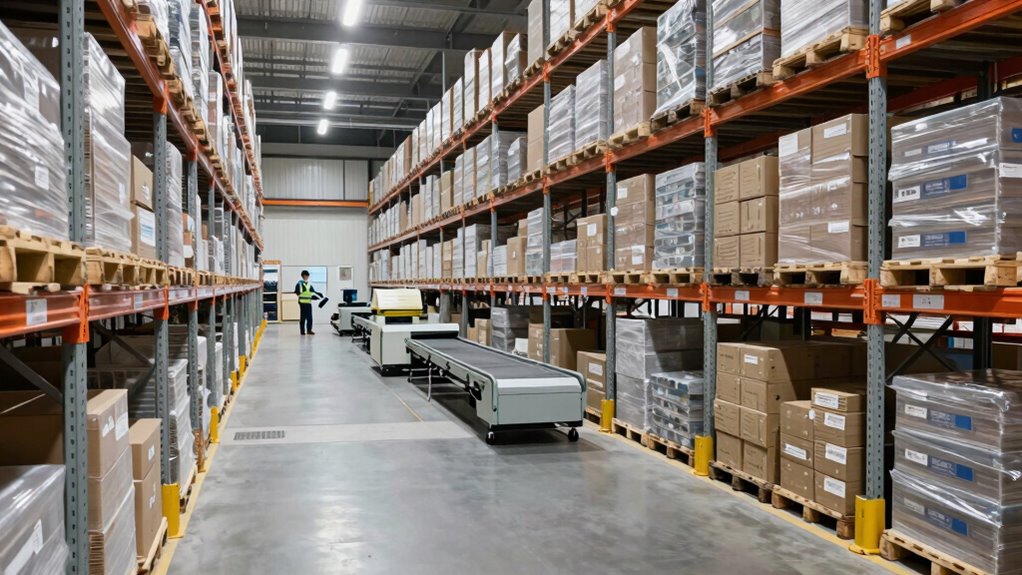

To plan your warehouse for growth, focus on simple, proven systems like organizing inventory by demand, utilizing vertical storage, and keeping clear pathways. Use tools like RFID or barcodes for accuracy and real-time data. Flexibility in layout and automation helps handle increasing volume without chaos. Regularly review and adjust your strategies to stay ahead. Keep optimizing your space and processes, and you’ll be prepared for expansion—more tips await you as you explore further.

Get business pricing on office and shipping supplies
- Business-only prices and quantity discounts
- Tax-exempt purchasing
- Multiple users, one account, clear invoices
Key Takeaways
- Implement flexible, scalable layouts that can be easily reconfigured as demand grows.
- Prioritize vertical storage and modular racking to maximize space efficiency without expanding footprint.
- Use technology like RFID and barcode scanning for accurate inventory tracking and quick access.
- Organize fast-moving items near shipping zones to reduce handling time and improve throughput.
- Regularly review and update storage and inventory systems to adapt to changing business needs.
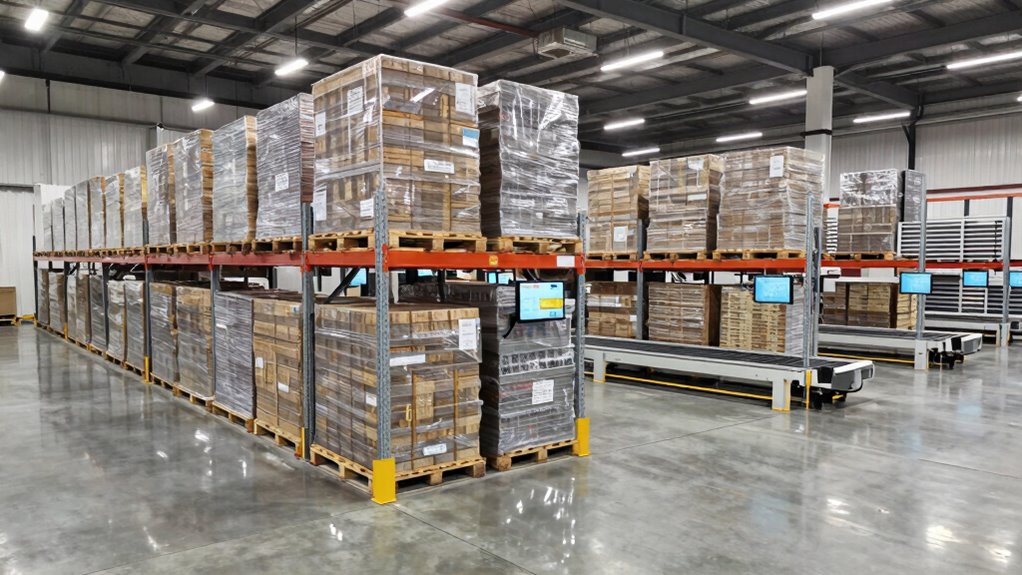
Planning your warehouse and storage facilities for growth is essential to support your expanding operations efficiently. When you’re scaling up, it’s easy to overlook how critical effective inventory optimization and space utilization are to maintaining smooth workflows. By focusing on these areas, you can prevent clutter, reduce errors, and guarantee your warehouse can handle increased demand without chaos. Start by analyzing your current storage methods and pinpointing inefficiencies. Are there products that sit idle or are stored in hard-to-reach areas? Are you making the most of vertical space? Addressing these questions helps you identify opportunities to optimize inventory placement and maximize space.
Optimize storage and space to support growth, reduce clutter, and improve workflow efficiency.
Inventory optimization isn’t just about keeping track of stock; it’s about organizing it in a way that streamlines picking, packing, and restocking processes. Use data to understand which items move fastest and position them closest to shipping zones. This reduces travel time and accelerates order fulfillment. Implementing a systematic inventory management system, such as barcode scanning or RFID technology, can further improve accuracy and visibility. When your inventory is optimized, you spend less time searching for products, which boosts productivity and customer satisfaction. Incorporating technology solutions like RFID can also help you stay ahead of future growth demands and adapt to evolving industry standards. Additionally, integrating these systems with your overall supply chain strategies ensures a cohesive approach to managing increased volume. Keeping your inventory data accurate and up-to-date is crucial for making informed decisions about storage and replenishment. Regularly reviewing and updating your inventory data helps prevent discrepancies and keeps your operations running smoothly.
Space utilization is another essential aspect. As your inventory grows, so does the need for smart storage solutions. Vertical storage units, adjustable shelving, and modular racking systems allow you to make the most of every inch of your warehouse. Think about redesigning your layout to create dedicated zones for receiving, storage, picking, and shipping. Clear pathways and organized aisles not only improve safety but also make it easier for your team to move efficiently. Consider investing in automation tools like conveyor belts or robotic pickers if your volume justifies it, as these can dramatically improve space efficiency and speed. Additionally, leveraging space optimization strategies ensures you maximize capacity without expanding your footprint unnecessarily. Regularly reviewing your layout and storage practices helps you identify new opportunities for improvement as your operations evolve. Staying proactive about space planning is key to scaling effectively.
To plan for future growth, don’t just focus on current needs—think ahead. Regularly review your storage systems and inventory practices to adapt to changing demands. A flexible layout that can be expanded or reconfigured allows you to scale without major disruptions. Training your staff on best practices for inventory management and space utilization ensures everyone plays a role in maintaining an organized, efficient warehouse. Ultimately, a well-thought-out plan that emphasizes inventory optimization and space utilization helps you handle growth seamlessly, keeping your operations running smoothly and your customers satisfied.
Products Worth Considering

FLEXISPOT 40-Inch Height-Adjustable Standing Desk Converter with Keyboard Tray, Black

FLEXISPOT 36-Inch Standing Desk Converter, Black

Logitech MX Keys Combo for Business Keyboard and Mouse – Graphite
As an affiliate, we earn on qualifying purchases.
Frequently Asked Questions
How Do I Choose the Right Storage System for My Business?
To choose the right storage system, start by evaluating your inventory organization needs and space utilization. Consider the types of products you store, their sizes, and how often you access them. Opt for systems that maximize space efficiency and streamline retrieval. Think about flexibility for future growth. Ultimately, select a solution that simplifies operations, improves inventory management, and adapts easily as your business expands.
What Are Common Pitfalls in Warehouse Expansion Planning?
When planning warehouse expansion, you risk inventory mismanagement and space underutilization if you don’t carefully analyze your needs. You might overestimate storage capacity, leading to wasted space, or underprepare, causing congestion. Failing to involve your team or neglecting future growth can also cause issues. To avoid these pitfalls, create a flexible plan that balances current demands with future growth, and regularly review your layout for efficiency.
How Can Technology Improve Warehouse Efficiency?
Technology can markedly boost your warehouse efficiency by streamlining inventory management and introducing automation solutions. You’ll reduce errors, improve order accuracy, and speed up processes with real-time data tracking. Automation solutions like robotics and conveyor systems handle repetitive tasks, freeing your staff for more strategic activities. By integrating these technologies, you create a more agile, responsive warehouse that adapts quickly to growth and changing demands, boosting overall productivity.
What Are Cost-Effective Ways to Optimize Storage Space?
Think of your storage space as a puzzle, and each piece as inventory management. To optimize, you can use vertical shelving to stretch upwards, making better space utilization. Implementing barcode systems streamlines inventory tracking, reducing wasted space. Rearrange items based on frequency of use, and consider modular shelving for flexibility. These cost-effective strategies guarantee you maximize every inch without breaking the bank, turning chaos into an organized, efficient warehouse.
How Do I Forecast Future Storage Needs Accurately?
To forecast your future storage needs accurately, monitor your inventory turnover regularly to identify trends and seasonal patterns. Analyze space utilization to understand how efficiently your current storage is used and where improvements are needed. Use historical data combined with growth projections, and consider implementing simple forecasting tools or software. This proactive approach helps you anticipate demand, optimize space, and avoid overstocking or shortages as your business expands.
Conclusion
By implementing these simple, proven systems, you’ll transform your warehouse into a powerhouse of efficiency, where chaos turns into crystal-clear order. Picture your storage space expanding effortlessly like a balloon, ready to burst with growth, while your team glides through tasks with the ease of a well-oiled machine. With these strategies, you’ll not just manage growth—you’ll dominate it, turning your warehouse into a fortress of productivity that leaves competitors in the dust.