

Building resilient supply chains is key to growing sustainably in today’s interconnected world. You can reduce risks by diversifying suppliers across regions, mapping dependencies, and evaluating each partner’s reliability. Stay proactive by monitoring geopolitical, economic, and environmental factors, and develop contingency plans to stay flexible during disruptions. Strengthening collaboration with your suppliers enables quick problem-solving and continuous improvement. Keep exploring how these strategies can help you adapt and thrive despite challenges.
Key Takeaways
- Diversify suppliers across regions to minimize dependency and mitigate regional disruptions.
- Map supply chain dependencies to identify vulnerabilities and develop contingency plans.
- Foster strong, collaborative relationships with multiple suppliers for better communication and risk sharing.
- Continuously monitor geopolitical, economic, and environmental risks to enable proactive response strategies.
- Maintain flexible logistics, safety stock, and invest in real-time supply chain visibility tools for quick adaptation.
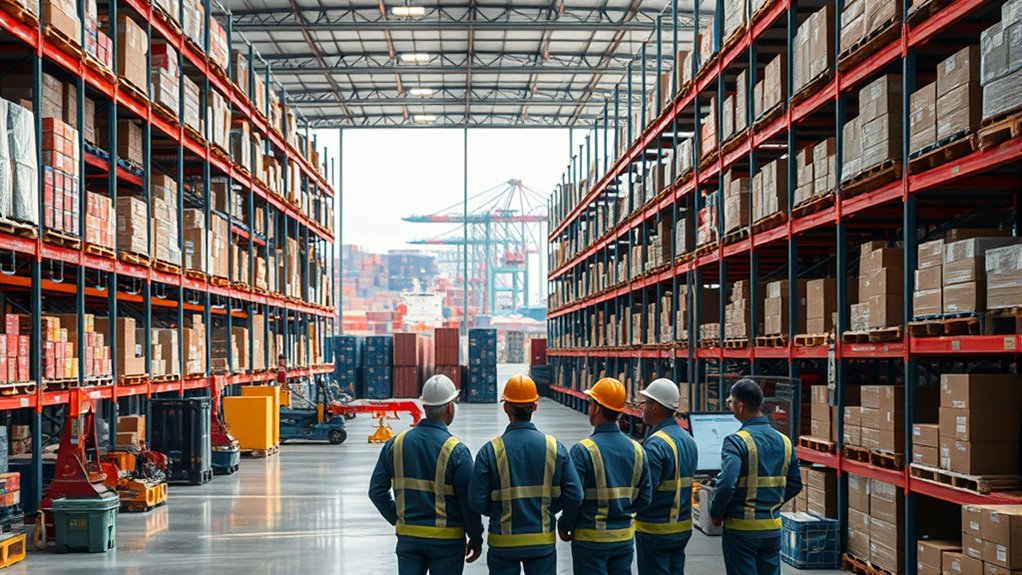
In today’s interconnected world, building resilient supply chains is essential for sustainable growth. When disruptions happen—whether due to natural disasters, geopolitical tensions, or unforeseen events—they can quickly stall operations, increase costs, and damage your reputation. That’s why focusing on risk mitigation is vital to maintaining stability. You need to identify potential vulnerabilities early and develop strategies to address them. One effective approach is supplier diversification, which involves working with multiple suppliers across different regions, rather than relying on a single source. By spreading your supplier base, you reduce the risk of a single point of failure derailing your entire supply chain. This not only safeguards against regional disruptions but also fosters competition, leading to better pricing and service quality.
Building resilience through supplier diversification requires a strategic approach. Start by mapping out your supply chain to understand where your dependencies lie. Then, seek out alternative suppliers who can step in if your primary partner encounters issues. Don’t just focus on cost; evaluate suppliers based on their reliability, quality standards, and geographic location. Establish clear communication channels and build strong relationships with multiple partners. This way, if one supplier faces delays or operational challenges, others can fill the gap, ensuring your production lines keep running smoothly. Incorporating supply chain management practices can also enhance your ability to monitor and respond to risks more effectively.
Strategically map your supply chain and diversify suppliers to ensure resilience and continuous operations.
Risk mitigation also involves continuously monitoring your supply chain environment. Keep an eye on geopolitical developments, economic shifts, and environmental factors that could impact your suppliers. Implement contingency plans and develop flexible logistics strategies so you can quickly adapt if disruptions occur. For example, maintaining safety stock or holding buffer inventory can buy you time during unforeseen delays. Investing in technology, like supply chain management software, helps you gain real-time visibility into your operations, making it easier to respond swiftly and effectively.
Furthermore, fostering collaborative relationships with your suppliers enhances resilience. When you work closely with partners and share information openly, it enables quicker problem-solving and fosters mutual trust. This collaborative approach helps you anticipate potential issues before they escalate and develop joint strategies to mitigate risks. Remember, resilience isn’t built overnight; it’s a continuous process of evaluating vulnerabilities, diversifying sources, and strengthening relationships.

Supply Chain Management For Dummies
As an affiliate, we earn on qualifying purchases.
As an affiliate, we earn on qualifying purchases.
Frequently Asked Questions
How Can Small Businesses Enhance Their Supply Chain Resilience Effectively?
To enhance your supply chain resilience, focus on supplier diversification to avoid reliance on a single source. Regularly review and optimize your inventory to prevent stockouts and reduce excess. Strengthen relationships with multiple suppliers, negotiate flexible terms, and adopt technology for real-time tracking. These steps help you adapt quickly to disruptions, ensuring your business remains agile and competitive in changing market conditions.
What Emerging Technologies Are Most Promising for Supply Chain Risk Management?
You’re on the right track—technology is the name of the game. Blockchain innovation offers transparent, tamper-proof records, boosting supply chain trust. Meanwhile, AI integration helps forecast risks, optimize routes, and respond swiftly to disruptions. Together, these emerging tech tools can turn supply chain management from a shot in the dark into a well-oiled machine, giving you the edge to stay resilient and ahead of the curve.
How Do Geopolitical Tensions Impact Global Supply Chain Resilience Strategies?
Geopolitical tensions greatly impact your supply chain resilience strategies by increasing geopolitical risks and the likelihood of trade disruptions. You need to diversify suppliers, create contingency plans, and monitor geopolitical developments closely. These measures help you adapt quickly to trade disruptions, mitigate risks, and maintain smooth operations despite global uncertainties. Staying proactive and flexible ensures your supply chain remains resilient amid geopolitical challenges.
What Role Does Sustainability Play in Building Resilient Supply Chains?
You might think sustainability is just a trend, but it’s vital for resilient supply chains. By prioritizing ethical sourcing and reducing environmental impact, you create stronger, more adaptable networks. These practices help you mitigate risks like resource shortages and regulatory changes. Embracing sustainability not only protects your reputation but also ensures long-term growth, making your supply chain more resilient against disruptions and more aligned with consumer expectations.
How Can Companies Measure the Success of Their Supply Chain Resilience Initiatives?
You can measure the success of your supply chain resilience initiatives by tracking performance metrics like lead times, inventory levels, and recovery rates during disruptions. Regularly analyze these metrics to identify areas for continuous improvement. Setting clear benchmarks helps you gauge progress and adjust strategies accordingly, ensuring your supply chain becomes more resilient over time. Consistent monitoring and proactive adjustments are key to sustaining resilience and supporting growth.
Supply Chain Transformation: How to Leverage Technology for Competitive Advantage
As an affiliate, we earn on qualifying purchases.
As an affiliate, we earn on qualifying purchases.
Conclusion
By building bold, balanced, and flexible supply chains, you position your business for robust growth. Embrace innovation, invest in insight, and implement intelligent infrastructure to inspire resilience. Remember, resilience isn’t just about recovery—it’s about readiness. With deliberate dedication and dynamic adaptation, you can develop a dependable, durable supply chain that drives development and defies disruptions. Stay strategic, stay strong, and steer your supply chain toward sustainable success.

IoT Supply Chain Security Risk Analysis and Mitigation: Modeling, Computations, and Software Tools (SpringerBriefs in Computer Science)
As an affiliate, we earn on qualifying purchases.
As an affiliate, we earn on qualifying purchases.

Inventory Management Explained: A focus on Forecasting, Lot Sizing, Safety Stock, and Ordering Systems.
As an affiliate, we earn on qualifying purchases.
As an affiliate, we earn on qualifying purchases.