
TL;DR

Get business pricing on office and shipping supplies
- Business-only prices and quantity discounts
- Tax-exempt purchasing
- Multiple users, one account, clear invoices
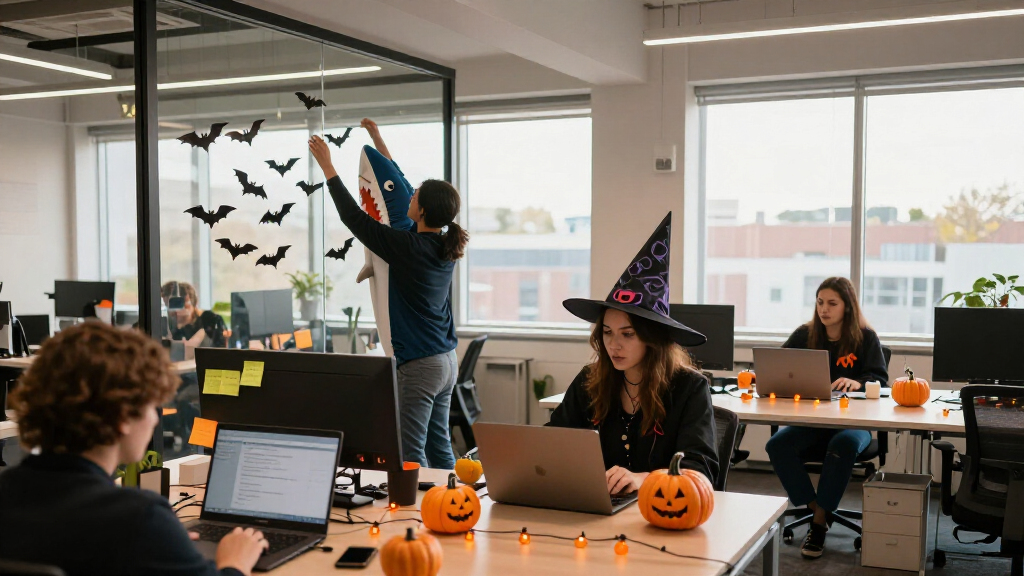
Halloween themed business costumes are workplace-appropriate outfits that balance fun with professionalism — think puns like a suit covered in “sorry” signs (a formal apology) or team themes where one person is a stapler and another is a whiteboard. Americans spend roughly $3–4 billion on costumes each Halloween, per NRF survey data, and about 30% of adults plan to dress up for work events. Keep costs near $20, keep it client-safe, and keep it comfortable enough for a full workday.
Last October, a legal secretary walked into her firm wearing a suit, a cowboy hat, and a toy badge that read “Loan Ranger”. Two partners laughed out loud. One client asked for a photo. That’s the sweet spot of Halloween themed business costumes: clever enough to remember, safe enough for a 10 a.m. client call.
Halloween has quietly become the second-largest commercial holiday in the US, generating roughly $10–12 billion in annual spending, with $3–4 billion of that on costumes, according to National Retail Federation surveys [1]. And adults are increasingly buying for themselves — including for the office.
In this guide, you’ll get pun costumes that land, group themes for teams of 4–10, Zoom-friendly options, a realistic budget, and the mistakes that get people a quiet talk with HR.
Pun costumes (Formal Apology, Loan Ranger, Identity Theft) are the safest and cheapest office options — most cost under $10 using clothes you already own.
Cap group costume spending at $20 per person so nobody drops out over budget; agree on the cap before anyone shops.
For video calls, design chest-up: bold props and signs read at thumbnail size, and a digital background can serve as half your costume.
Avoid political, culturally appropriative, or revealing costumes — most companies now publish explicit Halloween guidelines, and clients may see you.
Match costume ambition to your industry: full commitment for creative agencies, subtle removable accessories for client-facing roles.
Why Office Costumes Actually Work (When Done Right)
Halloween themed business costumes work because they give colleagues something low-stakes to talk about besides deadlines. Workplace participation in themed events correlates with higher employee engagement and retention — people who play together tend to stick around. A shared laugh over the accounting team dressed as the cast of The Office does more for morale than a quarter of pizza parties.
Picture the scene: it’s 9:15 on October 31st. Someone from marketing shuffles in wearing a cardboard frame around their torso. They’re a whiteboard. Ten minutes later, a coworker arrives with a giant red handle on their head — the stapler. By lunch, half the floor has coordinated. That’s the moment costumes earn their keep.
But there’s a catch. According to NRF data, roughly 30% of adults plan to dress up for work events [1] — which means 70% don’t. Participation should always feel optional. The best office Halloweens are the ones where nobody felt pressured.
Costume-optional policies have become the norm at companies that do Halloween well. Fun you’re forced to have isn’t fun.
7 Pun Costumes That Won’t Get You a Meeting With HR
Pun costumes are the safest bet in a professional office because they’re clever rather than spooky, revealing, or political. They signal wit, not wildness — and they cost almost nothing. Here are seven that reliably perform:
- Formal Apology — wear a full suit, then tape handwritten “sorry” signs all over it. Total cost: one sticky note pack.
- Loan Ranger — a suit, a cowboy hat, and a toy badge. Perfect for finance and banking.
- Sue-flavored Lawyer — a blazer with paper “Sue” name tags everywhere. Legal teams love this one.
- Identity Theft — wear a shirt with a coworker’s name and face photocopied onto “WANTED” posters.
- Smart Cookie — business casual with a graduation cap and cookie accessories taped on.
- CEO of Procrastination — a blazer over pajama pants. Sneaks comfort into the office legitimately.
- Error 404: Costume Not Found — plain clothes and a printed sign. The official costume of whoever forgot until the night before.
The pattern: pun costumes use clothes you already own plus $5–10 of props. Nobody feels left out because of budget, and nobody’s uncomfortable on a video call.
Group Costume Ideas for Teams of 4 to 10 Coworkers
Group costumes are popular for workplace Halloween because they turn individual outfits into a team achievement. The formula is simple: one recognizable theme, flexible roles, and a low per-person budget. Pick a theme where one person as a minor character still feels included and another as a lead character doesn’t hog the spotlight.
A five-person accounting team once dressed as the seven deadly sins — minus two, budget cuts, they joked. Another classic: the office supplies theme, where one person as a stapler, another as a whiteboard, a third as a rolling chair. Cheap, instantly readable, and funnier the more people join.
Themes that consistently work:
- TV casts — The Office, Stranger Things, Wednesday (still riding its Netflix wave)
- Decades — everyone picks their favorite 70s/80s/90s look
- Business jargon come to life — “circling back,” “low-hanging fruit” (a fruit costume worn low), “synergy”
- Meme roster — strong for tech teams, risky if leadership won’t get the references
Cost should stay under $20 per person for group themes. The moment a theme requires a $60 costume, someone quietly drops out — and the theme collapses.
What Works on Zoom vs. What Works in the Office
Since 2020, the “Zoom-appropriate” costume has become its own category: upper-body only, readable in a small video tile, and paired with a themed digital background. A full-body T-rex inflatable is invisible on camera — but a blazer covered in sticky notes reads perfectly.
| Factor | In-Office Costume | Video Call Costume |
|---|---|---|
| Visibility | Full body counts | Chest-up only |
| Detail level | Shoes, props, movement | Must read at thumbnail size |
| Background | Office environment | Digital background doubles as scenery |
| Comfort needs | All-day wear, walking | Can wear pajamas below frame |
| Best format | Group themes | Bold props, signs, pun shirts |
Remote teams run virtual costume contests with polls and small prizes — a $25 gift card goes further culturally than you’d think. And here’s the quiet bonus: a “CEO of Procrastination” blazer over sweatpants is the most comfortable work outfit you’ll wear all year.
How Much Should You Actually Spend? A Realistic Budget
For a workplace costume, $20 or less is the right budget for most people. You’re buying a conversation starter, not a Comic Con showcase. The best office costumes I’ve seen were built from thrift store blazers, cardboard, and printer paper.
- $0–10: DIY and pun territory. Sticky notes, printed signs, clothes you own. The “Formal Apology” costs about $3.
- $10–20: Thrift-plus-props. A secondhand suit vest and a hat transforms you into half a dozen characters.
- $20–40: Rental or upgrade. Costume rentals have grown with sustainability trends — services like Rent the Runway have added costumes, and many cities host costume swaps in early October.
One caveat: group themes can quietly creep past budget. If you’re organizing, agree on a per-person cap before anyone shops. A $15 cap keeps the intern and the VP on equal footing.
The Costumes That Get People in Trouble (Avoid These)
Most workplaces now publish Halloween costume guidelines, and HR departments have gotten more explicit about DEI-aware rules in recent years. The short version: avoid anything politically charged, culturally appropriative, overly revealing, or that mocks a real group of people. What feels like satire to you can feel like an insult to the client on your 2 p.m. call.
A real-world scenario: a consultant wore a political figure costume to the office in 2016, thinking everyone in the open-plan office shared their politics. A client saw it through a glass wall during a site visit. The fallout lasted longer than the candy.
- Avoid: blackface or any race-based costume, religious garments as jokes, hyper-sexualized outfits, current political figures
- Caution: gore in client-facing offices, costumes that block your face on badge-security days
- Safe defaults: puns, pop culture, food, office supplies, decades themes
When in doubt, ask one question: “Would I be comfortable if this photo appeared on the company’s LinkedIn page?” If no — change costumes.
Industry-by-Industry: What Your Office Can Get Away With
The right costume depends heavily on your industry. A creative agency can pull off elaborate full transformations; a client-facing law firm cannot. Here’s the quick map:
- Finance and law: Puns shine here — wordplay fits a profession built on precise language. “Loan Ranger,” “Sue-flavored lawyer,” “Trust Fund” (a suit with a pillow stuffed with play money).
- Tech: Pop culture and meme references land well. Internal teams have more latitude than customer-facing ones.
- Creative agencies: Go big. Full paint, props, commitment. This is where the elaborate costumes live.
- Client-facing roles (sales, consulting, hospitality): Subtle accessories — themed ties, hats, a small prop you can stash before a meeting.
Client-facing roles need a costume with an off-switch. A headband takes one second to remove before a video call; full body paint does not. Plan for the meeting you actually have that day, not the party you wish you had.
Frequently Asked Questions
What are appropriate Halloween costumes for a professional office?
Workplace-safe costumes are clever rather than edgy: pun outfits (a suit covered in “sorry” signs for a formal apology), pop culture references, office supplies, or decades themes. Avoid anything political, culturally appropriative, revealing, or gory. When in doubt, apply the LinkedIn test — if the photo could appear on your company’s page, you’re fine.
How much should I spend on a work Halloween costume?
Around $20 or less covers most great office costumes. The strongest options — pun costumes and DIY builds — often cost under $10 using clothes you already own plus a few props. For group themes, set a per-person cap before anyone shops so the budget stays fair across the team.
What costume works on a Zoom call?
Design for the chest-up frame. Bold props, signs, pun shirts, and themed blazers all read clearly at thumbnail size, and a digital background can serve as scenery. Full-body inflatables are wasted on camera — but the upside is you can wear sweatpants below the frame and stay comfortable all day.
What are good last-minute costumes using things I already own?
Try “Error 404: Costume Not Found” (plain clothes plus a printed sign), Identity Theft (a coworker’s name tag and photocopied face), or CEO of Procrastination (a blazer over pajamas). Each takes under ten minutes and costs close to nothing.
Should workplace costume participation be mandatory?
No. According to workplace trends, costume-optional policies have become more common, and only about 30% of adults plan to dress up for work events. Forced participation breeds resentment, especially among colleagues who dislike costumes for cultural, religious, or personal reasons. Make it fun to join — never required.
Conclusion
If you remember one thing: the best Halloween themed business costume is the one a client could see and smile at. Clever beats elaborate. Cheap beats costly. And a group theme with a $20 cap beats a solo showstopper every single time.
So grab a sticky note pad, raid the office supply closet, and be the Loan Ranger your floor didn’t know it needed.
Halloween Picks
halloween
As an affiliate, we earn on qualifying purchases.