TL;DR

Get business pricing on office and shipping supplies
- Business-only prices and quantity discounts
- Tax-exempt purchasing
- Multiple users, one account, clear invoices
ECB President Christine Lagarde said euro area headline inflation reached 4% in October, with energy costs a major driver, while core inflation was 2.5%. In an interview conducted by Yomiuri Shimbun on Nov. 4 and published by the ECB on Nov. 7, she also reflected on the central bank’s mistaken assumption that the 2021 supply shock would be temporary and discussed women’s representation in senior roles.
European Central Bank President Christine Lagarde said euro area headline inflation was 4% in October, driven heavily by rising energy prices, while underlying inflation indicators remained comparatively stable. In an interview with Japan’s Yomiuri Shimbun, published by the ECB on Nov. 7, she also acknowledged that central banks had misjudged the 2021 inflation shock and said the ECB would base policy decisions on incoming data amid uncertainty.
Lagarde said October headline inflation was higher than the ECB had expected a few months earlier, though it was in line with market expectations. She attributed much of the rise to energy: energy inflation reached 20.8%, up from 18.9% in September. She cited conflict in the Middle East and reduced global refinery capacity as drivers. Food inflation also increased, she said.
Measures excluding volatile categories were less elevated. Core inflation was 2.5%, unchanged from September, while services inflation edged up to 3.3%. Lagarde said services inflation had remained within the range observed over the previous four months. She cautioned that the detailed breakdown was not yet available, leaving the ECB to examine whether services pressure came mainly from energy-intensive sectors such as transport or was spreading more broadly.
Lagarde said inflation would remain high in coming quarters and that the longer it stayed elevated, the greater the risk to the ECB’s medium-term target. She reported no current signs of second-round effects beyond those already included in the bank’s projections, citing wage agreements and company wage expectations as indicators under close review. She declined to anticipate the next forecast, noting that higher energy futures and long-term interest rates could affect both inflation and growth, while oil prices had recently fallen.
Inflation Risks Shape ECB Decisions
The interview offers a snapshot of how the ECB is weighing a sharp rise in headline inflation against steadier underlying measures. The distinction matters because a jump concentrated in energy may have different implications for medium-term inflation than broad price increases across services and wages. Lagarde said the missing detailed breakdown would help policymakers judge whether energy costs were spilling into other parts of the economy.
Her comments also make clear that the bank has not ruled out changes to its outlook. Higher energy futures and long-term interest rates have shifted since the September projections, but Lagarde said the forecast process would determine their net effect. The interview does not announce a policy-rate decision or establish that a change is imminent. It describes the indicators the ECB is monitoring as it assesses inflation risks.
Products Worth Considering

Samsung 34-inch ViewFinity S50GC Ultra-WQHD Monitor
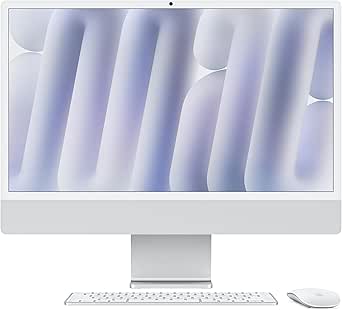
Apple iMac (24-inch, 2024) with M4 Chip, 16GB Unified Memory, 256GB SSD, Silver

Apple MacBook Neo 13-inch Laptop with A18 Pro Chip, 8GB Memory, 256GB SSD, Liquid Retina Display, 1080p Camera – Silver
As an affiliate, we earn on qualifying purchases.
Lessons From the 2021 Shock
Asked whether the ECB had been behind the curve during the energy shock that followed Russia’s invasion of Ukraine, Lagarde said central bankers across major economies had initially viewed the inflation as a temporary supply shock. She recalled discussions involving the Federal Reserve, Bank of England, Bank of Japan and ECB, saying policymakers expected supply-driven inflation to recede.
In hindsight, she said that judgment was misguided because supply constraints coincided with a demand rebound as economies reopened and consumers spent accumulated savings. Lagarde described that experience as a reason to be cautious about interpreting the current environment, which she characterized as marked by uncertainty, trade and supply-chain disruptions, and a greater focus on security.
The interview also addressed gender representation. Lagarde said the ECB Governing Council had 27 members and only two women: herself and Executive Board member Isabel Schnabel, whom Lagarde said was due to step down at the beginning of January. She argued that national governments make many senior appointments and may favor candidates who resemble those already in power. She also recalled former Japanese Prime Minister Shinzo Abe’s “One Million Women” initiative, which she said helped more women enter the workforce through policies including expanded childcare access.
“The underlying indicators are stable.”
— Christine Lagarde, ECB president
Key Inflation Details Still Pending
The interview does not provide the detailed October inflation breakdown Lagarde said the ECB was awaiting. It therefore remains unclear how much of the rise in services inflation reflects energy-intensive sectors, such as transport, and whether indirect effects are becoming broader. She said policymakers had not yet seen evidence of a shift in wage expectations, but would continue to watch those indicators.
Nor did Lagarde say what the ECB’s next projections would show or signal a specific interest-rate move. The net effect of higher energy futures, higher long-term interest rates and more recent declines in oil prices had not yet been determined in the forecast exercise described in the interview.
ECB Forecast Review Ahead
The ECB’s forthcoming forecast exercise is expected to assess how changes in energy markets and long-term interest rates affect medium-term inflation and growth. Lagarde said policymakers would examine the detailed inflation data when available and keep tracking wage agreements and business expectations for evidence of second-round effects.
She described monetary policy as dependent on data and decisions made meeting by meeting. The interview did not identify a date for a policy change or promise a particular response. The next relevant developments are the detailed inflation breakdown, the updated projections and the ECB’s subsequent policy assessment.
Key Questions
What inflation figures did Lagarde cite for October?
She said euro area headline inflation was 4%. Core inflation was 2.5%, unchanged from September, and services inflation was 3.3%.
What did Lagarde say was driving inflation higher?
She identified energy as a major contributor. Energy inflation rose to 20.8% from 18.9% in September, which she linked to conflict in the Middle East and reduced global refinery capacity. She also said food inflation had increased.
Did Lagarde announce an interest-rate decision?
No. The interview contains no announcement of a rate change. Lagarde said policy would be decided using incoming data and that the ECB’s forecast exercise would assess changes in energy futures, interest rates and other factors.
What did she say central banks learned from the 2021 shock?
Lagarde said central banks initially expected supply-driven inflation to be temporary, but later recognized that supply problems coincided with stronger demand as economies reopened. She called that earlier assessment misguided in hindsight.
What did Lagarde say about women’s representation at the ECB?
She said two of the ECB Governing Council’s 27 members were women at the time of the interview: Lagarde and Executive Board member Isabel Schnabel. Lagarde also discussed the role of national governments in senior appointments.
Source: ecb.europa.eu