
📊 Full opportunity report: When One Agent Isn’t Enough: Claude Now Builds Its Own Team of Agents on the Fly on ThorstenMeyerAI.com — validation score, market gap, and execution plan.

Get business pricing on office and shipping supplies
- Business-only prices and quantity discounts
- Tax-exempt purchasing
- Multiple users, one account, clear invoices
TL;DR
Claude has introduced a new feature called dynamic workflows, allowing it to create and coordinate multiple subagents independently for complex tasks. This development aims to improve performance on high-value, multi-step projects. The feature is still in testing and is not recommended for simple tasks.
Claude has introduced a new capability to autonomously build and manage its own team of agents on the fly, marking a significant advancement in AI orchestration. This feature, called dynamic workflows, allows the model to assemble specialized subagents tailored to complex tasks, improving performance where single-agent approaches fall short. The development is part of Anthropic’s ongoing efforts to enhance AI collaboration and task execution efficiency.
The new feature enables Claude to write and execute small JavaScript programs that orchestrate multiple subagents, each with focused goals and isolated contexts. These subagents can be assigned different roles, such as dispatchers, specialists, or independent reviewers, and can run in parallel or sequentially. The system can also select appropriate models for each subagent, from fast, inexpensive ones for basic tasks to more powerful models for judgment and verification.
According to Anthropic, this approach addresses common failure modes of single-agent work, such as premature completion, self-bias, and goal drift. By dividing work into focused parts and incorporating independent checks, Claude can produce more reliable results on complex, high-value projects. The feature is especially suited for tasks like code refactoring, research synthesis, fact-checking, and large-scale data analysis.
Anthropic emphasizes that dynamic workflows are more resource-intensive and should be reserved for demanding tasks. The system can also resume interrupted workflows, making it adaptable to long or iterative projects. The feature is activated via specific prompts, such as asking for a workflow or using the keyword ‘ultracode.’
When one agent isn’t enough: Claude now builds its own team on the fly
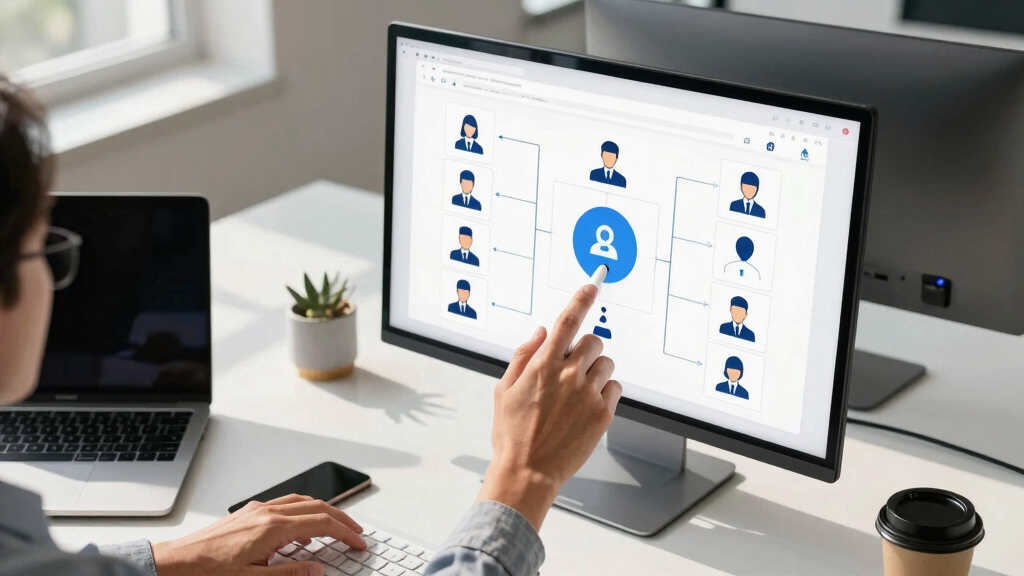
Skills package what you know; loops decide how far you delegate over time. Dynamic workflows are the third axis — within a single task, Claude writes its own harness and assembles a temporary team of subagents. Think of it as Claude drawing an org chart for one job.
The shift is from prompting a worker to commissioning a team — more output, more cost, and a manager’s judgment required. Reach for a workflow when a task is big, parallel, adversarial, or judgment-heavy — and when you can feel a single agent getting lazy, grading its own homework, or losing the plot. Bound it (token budgets, pilot first) — workflows can spawn hundreds of agents and burn far more tokens. For everything else, don’t hire five people to change a lightbulb.
Implications for AI Collaboration and Task Management
This development signifies a shift toward more autonomous and modular AI systems capable of managing complex, multi-step tasks without constant human oversight. It enhances AI’s ability to perform high-stakes work, such as detailed research, code development, or extensive data analysis, with greater reliability.
For businesses and developers, this means more flexible and scalable AI solutions that can adapt to diverse workflows and reduce errors caused by single-agent limitations. It also opens new possibilities for AI-driven project management, where models can self-organize teams tailored to specific challenges, potentially reducing costs and increasing output quality.
However, the increased resource consumption and complexity may limit immediate adoption for simpler tasks, and ethical considerations around autonomous decision-making remain relevant.
As an affiliate, we earn on qualifying purchases.
Evolution of Multi-Agent AI Capabilities
Anthropic has been progressively enhancing Claude’s capabilities, moving from basic skill packages to more sophisticated orchestration features. Previous updates introduced looping and delegation mechanisms, which allowed Claude to handle multi-stage tasks better. The current addition of dynamic workflows completes this trilogy by enabling the model to generate its own orchestration scripts, effectively acting as a team lead managing multiple agents.
This approach draws inspiration from traditional team management techniques, such as dividing work, independent verification, and iterative refinement. It builds on earlier experiments where Claude could coordinate static collections of agents, but now offers real-time, tailored assembly of agent teams for each task.
While the concept is still evolving, early demonstrations include rewriting complex codebases, conducting multi-source research, and verifying claims across documents, highlighting its potential to transform large-scale AI projects.
“Dynamic workflows enable Claude to write its own orchestration scripts, effectively managing multiple specialized agents for complex tasks.”
— Thorsten Meyer, AI researcher at Anthropic
Limitations and Risks of Autonomous Agent Teams
It is not yet clear how well the dynamic workflows perform across diverse real-world applications or how they handle unexpected errors. The resource costs and potential for unintended behaviors in fully autonomous orchestration remain areas of active investigation. Anthropic has cautioned that the feature is optimized for complex, high-value tasks and may not be suitable for simple or low-stakes work.
Additionally, the long-term implications for AI safety and control, especially as models become more autonomous in managing their own teams, are still under discussion within the AI community.
Next Steps for Deployment and Evaluation
Anthropic plans to continue testing the feature across various domains, gathering user feedback and performance data. The company has indicated that broader deployment will depend on further refinement and safety assessments.
In the near term, expect targeted pilot programs with select partners to evaluate the effectiveness of dynamic workflows in real-world scenarios. Researchers will also explore safeguards to prevent misuse or unintended outcomes, ensuring responsible deployment.
Further updates are anticipated as the technology matures, potentially expanding the range of tasks that Claude can autonomously manage through self-assembled agent teams.
Key Questions
How does Claude build its own team of agents?
Claude writes and runs small JavaScript programs called workflows, which orchestrate multiple subagents, each with specific roles and goals, to handle complex tasks more effectively.
What types of tasks are suitable for dynamic workflows?
They are best suited for high-value, multi-step projects such as code refactoring, research synthesis, fact-checking, and large-scale data analysis where single-agent approaches often underperform.
Are there any limitations or risks?
Yes, the feature is resource-intensive, may produce unpredictable behaviors if misused, and is still under evaluation for safety and reliability in diverse applications.
When will this feature be available for general use?
Anthropic is currently testing the feature with select partners, with broader deployment contingent on further safety assessments and performance validation.
Can this approach replace human project management?
While it enhances AI autonomy, it is intended to assist and augment human teams rather than replace human oversight entirely, especially given current safety considerations.
Source: ThorstenMeyerAI.com
Halloween Picks
halloween
As an affiliate, we earn on qualifying purchases.