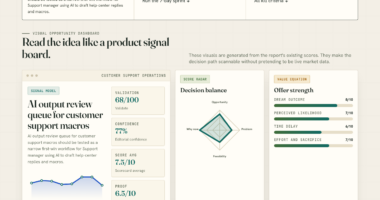
📊 Full opportunity report: Simplify Solo Performances With These One-Page Run Sheet Tips on IdeaNavigator AI — validation score, market gap, and execution plan.

Get business pricing on office and shipping supplies
- Business-only prices and quantity discounts
- Tax-exempt purchasing
- Multiple users, one account, clear invoices
TL;DR
A new workflow using one-page show-day run sheets is being tested for solo performers like speakers and magicians. This approach aims to consolidate all event details into a single document, reducing errors and improving efficiency. The initiative is currently in pilot testing with early validation strategies.
A new workflow for solo performers involves using one-page show-day run sheets to consolidate all event details into a single document, aiming to improve efficiency and reduce errors. This development is currently in the pilot testing stage, targeting professional speakers, magicians, and specialty acts who sell paid gigs.
The core idea is to address the common problem faced by solo performers: managing multiple emails, PDFs, and notes that contain event details, which often lead to last-minute confusion or mistakes on show day. The proposed solution is a tool that automatically assembles a comprehensive single-page run sheet from forwarded emails, contracts, rider requests, and other communications. This run sheet includes essential information such as venue details, contact information, schedule, rider specifications, payment status, travel notes, and additional tasks.
According to the developers, the tool leverages large language models (LLMs) to reliably extract relevant details from email threads and documents, reducing manual data entry. Users send all gig-related emails to a dedicated address, and the system generates the run sheet, flagging any conflicting information or changes. The MVP aims to support solo acts in managing multiple gigs efficiently, especially as last-minute adjustments are common in this industry.
Market validation involves onboarding twenty performing acts, assembling run sheets for their upcoming ten gigs, and tracking discrepancies or conflicts detected by the system. Revenue is expected to come from a monthly subscription model, with options for team tiers that include assistants or support staff. The initiative is still in early testing, with plans to refine the tool based on user feedback and performance metrics.
Impact on Solo Performance Preparation
This development could significantly reduce errors and last-minute surprises for solo performers, who often juggle multiple sources of information. By consolidating details into a single, easy-to-read page, performers can better prepare and execute their shows, leading to more professional and reliable performances. Additionally, the automation reduces administrative workload, freeing performers to focus on their craft and client relationships. If successful, this workflow could become a standard tool in the business of solo acts, enhancing overall efficiency and client satisfaction.
As an affiliate, we earn on qualifying purchases.
Industry Challenges in Managing Gig Details
Solo performers such as speakers, magicians, and specialty acts frequently face the challenge of managing scattered information across emails, PDFs, and notes. These details often change close to the event date, making last-minute adjustments difficult and error-prone. Traditionally, performers rely on manual note-taking or multiple document references, which can lead to overlooked details or miscommunications. The advent of AI-powered extraction tools offers a promising solution to streamline this process, but adoption is still in early stages.
Previously, efforts to improve show-day coordination focused on manual checklists or spreadsheets, which are time-consuming and prone to outdated information. The new approach aims to automate the assembly of a comprehensive, single-page document that updates dynamically with incoming communications, reducing the risk of oversight and improving overall professionalism.
“Integrating email threads and contracts into a single, automated run sheet can dramatically reduce last-minute errors for solo performers.”
— an anonymous researcher
Unanswered Questions About System Reliability
It is not yet clear how accurately the tool can extract complex or poorly formatted information, especially in diverse email and document styles. The effectiveness of the system in real-world scenarios remains to be validated through pilot testing. Additionally, questions remain about how performers will adapt to the new workflow and whether the system can handle last-minute changes without introducing new errors.
Upcoming Pilot Testing and User Feedback
The next steps involve onboarding twenty performing acts to test the system with their upcoming gigs. The focus will be on measuring the accuracy of run sheet assembly, the number of discrepancies flagged, and user satisfaction. Based on feedback, developers plan to refine the extraction algorithms and interface, aiming for a broader rollout once the system proves reliable and user-friendly. Monitoring subscription adoption and gathering performance data will be key indicators of success.
Key Questions
How does the system extract information from emails?
The system uses large language models (LLMs) to analyze forwarded emails, contracts, and documents, automatically identifying and extracting relevant details such as venue, schedule, and rider requests.
Can this system handle last-minute changes?
Yes, the system is designed to update the run sheet dynamically as new emails or documents are received, but its effectiveness in handling rapid changes will be tested during pilot phases.
Is this tool suitable for all types of solo acts?
The current focus is on professional speakers, magicians, and specialty acts that sell paid gigs, but future versions could expand to other performance categories.
What are the main benefits for performers?
Performers will benefit from reduced administrative workload, fewer last-minute errors, and a clearer overview of all event details, leading to more professional performances.
When will the tool be generally available?
The tool is still in pilot testing; a broader release depends on successful validation and refinement based on early user feedback.
Source: IdeaNavigator AI
Fall Picks
fall essentials
As an affiliate, we earn on qualifying purchases.