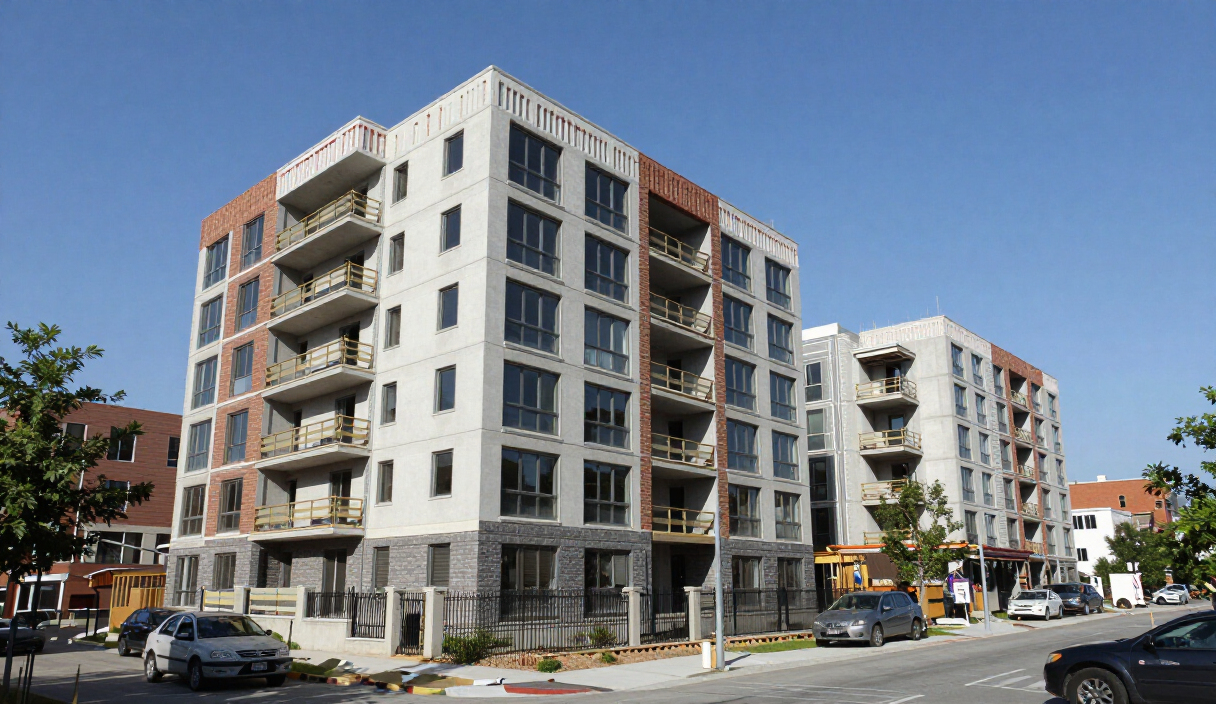
At Lindwerk Wohnbau GmbH, the handover doesn’t end with the key — it ends with a data record. An account from the Sonnenleite residential park, Building B — from the first special request to the shelf where the evidence outlives the project.

Get business pricing on office and shipping supplies
- Business-only prices and quantity discounts
- Tax-exempt purchasing
- Multiple users, one account, clear invoices
A handover that ends not with the key but with a data record — from the first special request to the shelf where the evidence outlives the project.
Each request becomes a case with states. Without a documented price approval, “implemented” cannot be saved — a condition in the database, not a rule in a manual.
The honest reason for switching: “We didn’t start because we wanted software.” Special requests were eating three weeks of office time on every build.
Site manager Jonas Frei rebuilt the existing geometry himself in the browser — walls, ceilings, columns, floor by floor — enough to hold rooms, defects and photos in one place.
A draft at the living-room wall? The pin’s reverse lookup shows May 14, before closing: insulation visible, timestamp anchored. The most expensive possibility is ruled out — no loop of expert assessments.
With the signature, the platform freezes “State at acceptance, Unit 12” — citable from now on, unchanged even if a hundred more cases follow.
The drywall company reports “Closing tomorrow morning.” The app demands a final look; the area stays open until the photos exist — audio, time, location preserved.
Twenty-four binders in boxes — the buyers like them. Only one new sheet inside each: an access code to the portal, in the buyer’s language, no app, no account.
Walk-through, Apartment 12: one tablet, one protocol, both parties sign the identical version at the same moment. Four items make the list.
The warranty clock starts at acceptance; deadlines derive from real dates. Eventually the project goes quiet — archived read-only, evidence chain intact, at a fraction of the cost.
The unromantic parts: two weeks before the office staff liked the case logic — onboarding and a practice project were necessary, not optional. And transparency is mutual: a decision left sitting for three weeks is in the history too.
Scenario story: Lindwerk Wohnbau is a fictional example company. The story shows the target build-out of Gewerkton; individual features are in beta or under development.
6:40 a.m., Building B
Katrin Sasse is standing in the stairwell, counting boxes. Each one holds a binder: operating manuals, care instructions, maintenance intervals, floor plan. Twenty-four binders for twenty-four apartments — that’s how Lindwerk Wohnbau did it for twelve years, and for twelve years the first call came four weeks later: “The slip for the ventilation is missing from my binder.”
The boxes are still there today because the buyers like them. The difference is that only one sheet of paper in each binder is new: an access code. It leads into the buyer portal, where everything Ms. Özdemir from Apartment 12 can know about her apartment is stored — in her language, without an app, without an account with anyone.
Sasse is a project manager, not a technician. She says one sentence about the switch that is more honest than any brochure: “We didn’t start because we wanted software. We started because on every project we were burning three weeks of office staff time on special requests.”
digital property handover documentation software
As an affiliate, we earn on qualifying purchases.
As an affiliate, we earn on qualifying purchases.
The Special Request That Became a Case
Sonnenleite has 24 apartments and 31 special requests. The classic route for that is an email chain: the buyer writes, the site manager replies, someone calls the electrician, at some point a price surfaces, and six months later nobody remembers who approved what, when.
In the portal, a special request is a case with states. Ms. Özdemir wants two additional outlets on the living room wall. She clicks, speaks her request — the portal is set to her language, the original remains as first-class evidence, the translation sits next to it and is marked as an aid. The electrician receives an inquiry, a price is created, the price goes back to her, and only once she has approved it can the case move into the “implemented” state at all. That is not a process rule in a manual, but a condition in the database: without a documented price approval, “implemented” cannot be saved.
Sasse says it changed the tone. “Conflict doesn’t arise because people are mean. It arises because two people remember the same conversation differently.” Anyone who opens the case sees the date, the price, the approval, the photo — and doesn’t have to remember.
What Lies Behind the Wall
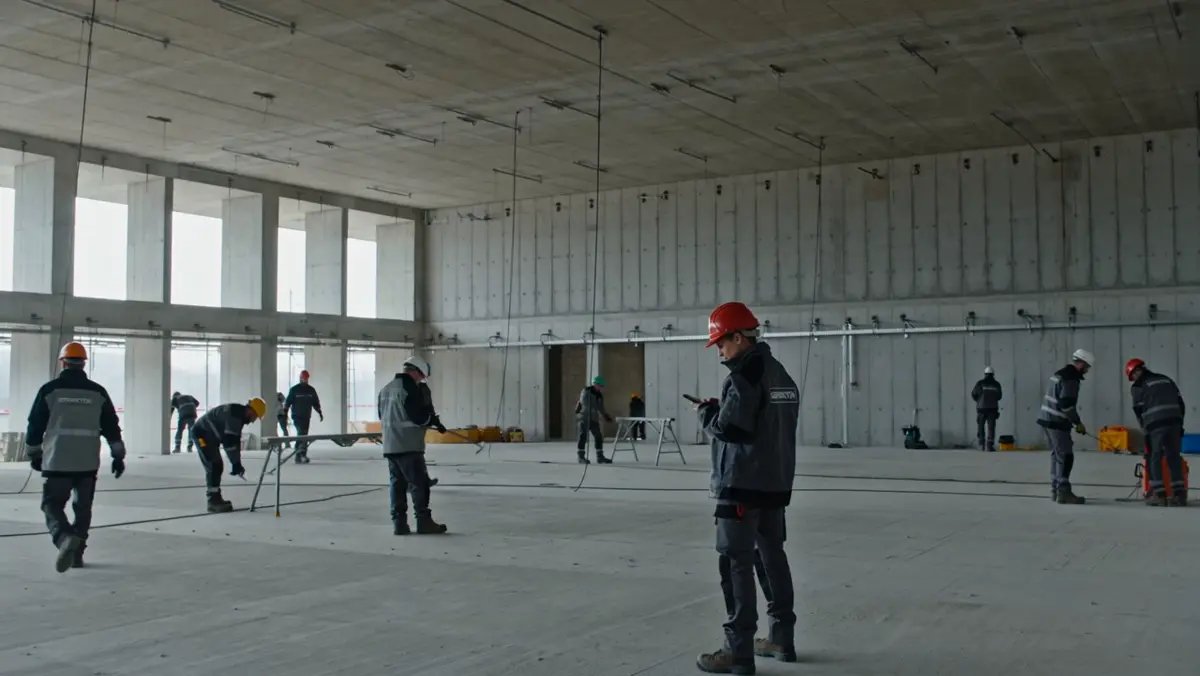
The real reason Sonnenleite is seamlessly documented today dates back to May. Back then there was no model of the building, just as there isn’t one for most projects of this size: 340 PDF plans, a structural engineering binder, nothing else. Site manager Jonas Frei therefore built the existing geometry himself in the browser — walls, ceilings, columns, doors and windows, floor by floor. Not a substitute for detailed design planning; that stays with the architecture firm. But enough to show what is being built, and enough to hold rooms, defects, and photos together in one place.
The portal draws its apartment plans from this model, and from it comes the floor plan Ms. Özdemir sees when she marks her outlets.
More important was the second thing. On May 14, the drywall company reports for Building B, axes 4 to 7: “Closing tomorrow morning.” With that, a window opens that the platform knows and that everyone in the industry fears without ever having given it a name — the moment before closing up. The app requests a final look for the area, notifies the affected trades, and only allows the area to be marked as closed once the photos are there. In the evening, Frei walks the axis with his phone, speaking in one take: “Axis 5, plumbing riser, insulation complete, pipe clamps in place, no damage.” The sentence becomes a record with time, location, and reference to the building component; the audio is preserved.
Seven months later, exactly this photo is needed. Not for a court — for a question.
The Walk-Through
Handover, 11:15 a.m., Apartment 12. Ms. Özdemir has her sister with her; Frei has a tablet. The protocol runs on one device, both sign the same document, both receive the identical version at the same moment — not a copy “for viewing,” but the same state.
Four items make the list. A scratch on the windowsill, a stiff door, a missing silicone joint, and the question about the ventilation: Why is there a draft at the living room wall? Frei taps and holds the pin on the wall, and the reverse lookup shows what this spot looked like on May 14, before it was closed. The insulation is visible, the date is right there, the image is stored unaltered and anchored with a timestamp. That doesn’t answer the question — but the most expensive possibility is ruled out, and in ninety seconds instead of a loop of expert assessments.
With the signature, the platform freezes the entire state as a named snapshot: “State at acceptance, Unit 12.” From now on, this state is citable. It no longer changes, not even if a hundred more cases are added afterward.
What the Developer Gets Out of It
The benefit for Lindwerk lies less in the handover day than in the weeks before it and the years after.
Before: The construction progress report for the financing bank is created from approved records instead of from a late night at a desk. The client window shows the shareholders a curated state — progress and open items, no internal notes; the site manager controls what is visible. And the commercial side stays on the same chain: the measurement from the calibrated plan as a proposal, the change order with reference to the documented case, the progress billing, the handoff to accounting.
In between: Lindwerk builds the same building in a different form every two years, and that’s exactly why Sasse reads her own numbers across all projects once a quarter — how many special requests per apartment, how long from inquiry to price approval, how many items remained open at acceptance. Not as an evaluation of people; individual performance cannot be aggregated in this analysis. The handover and acceptance templates her team works with were purchased by the company as a package and adapted to its own apartment types, instead of writing them itself for the fourth time.
After: On the day of acceptance, the warranty clock starts. The operations part of the platform takes over the property — deadlines derived from the actual acceptance dates, suggestions for inspections in good time before expiry, a reporting channel for buyers that looks like the portal they already know. For Sasse, that is the real break with the old world: “Handover used to be a farewell. Now it’s a transfer of responsibility.”
And eventually a project goes quiet. Then Sonnenleite moves into the archive: read access, evidence chain intact, stored immutably, for a fraction of what an active project costs. Archiving automatically produces a condensed summary — key figures, milestones, the time-lapse of the stairwell. Sasse put the one for Sonnenleite into the sales documents of the next project. Not as advertising, but as a piece of evidence: This is how we document.
The Unromantic Parts
Two things belong to the honesty of this story. First, it took Lindwerk two weeks before the office staff colleagues liked the case logic; the onboarding support and a practice project in the training environment were necessary for that, not optional. Second, transparency is mutual: if Lindwerk itself leaves a decision sitting for three weeks, that is in the history too. Sasse says only: “You have to want to live with that.”
What remains in the end is a sentence she now uses herself, without knowing it comes from the brand: In construction, what counts is what’s documented.
Transparency: Gewerkton is a product from the house of the publisher of this publication.
[Powered by Thorsten Meyer AI](https://thorstenmeyerai.com/)Learn more about Gewerkton and its lines: Field, Studio and Cloud.
Fall Picks
fall essentials
As an affiliate, we earn on qualifying purchases.