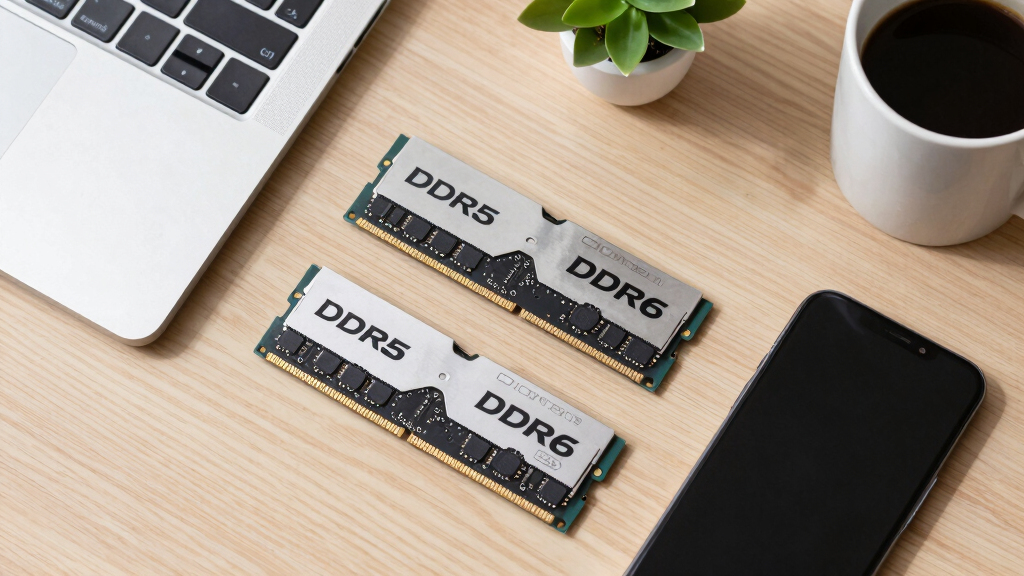

📊 Full opportunity report: DDR5 Now, DDR6 Soon: A Buyer’s Field Guide on ThorstenMeyerAI.com — validation score, market gap, and execution plan.
TL;DR
With memory prices remaining high through 2026, experts advise purchasing DDR5 now rather than waiting for DDR6, which won’t be mainstream until 2027 and carries a high cost. This guide explains why DDR5 is the best choice today.
Memory prices remain elevated through at least 2028, and the rollout of DDR6 is still years away, making it unwise to delay purchasing DDR5 memory for current or near-future builds, according to industry analysis.
Market forecasts indicate that significant price relief for memory components, including DDR5, is unlikely before 2028. Both AMD and Intel platforms currently perform optimally with DDR5-6000 CL30 configurations, and higher-speed kits offer little real-world benefit at a premium. Experts warn against buying DDR4 in 2026 due to its end-of-life status and high costs, advising builders to focus on DDR5 for new systems.
DDR6, expected to launch around 2026–27, offers substantial architectural improvements, including increased bandwidth and a new physical form factor (CAMM2). However, it is not backward compatible with DDR5, requires new CPUs and motherboards, and will initially be expensive. Experts recommend waiting until DDR6 standardization and broad adoption, likely around 2027–2030, before considering it for mainstream builds. Early adopters should expect higher prices and potential instability.
DDR5 now, DDR6 soon
A buyer’s field guide. The 20-year instinct — wait for prices to drop, or wait for the next generation — is broken this cycle. Buy the DDR5 you actually need now; don’t wait for DDR6. Here’s the reasoning.
Driven to end-of-life, production slashed. Same money, dead-end socket. Leave a working DDR4 box alone — but never start a new build on DDR4 to “save.”
A framework, not a gamble. Buy the DDR5 you need now, at the sweet spot, in the capacity you’ll actually use — don’t buy DDR4, don’t wait for DDR6. The two costliest mistakes in this market are the ones that feel prudent: waiting for a price drop that isn’t coming, and waiting for a next-gen part that launches dearer than what’s on the shelf. Next: The SSD Squeeze.
Why Immediate DDR5 Purchase Is the Best Strategy
This guidance matters because delaying memory upgrades could mean paying more later or missing out on current platform improvements. Buying DDR5 now allows users to build or upgrade efficiently without overpaying for future technology that is still years from mass adoption. For most users, investing in DDR5 ensures better value, performance, and longevity in the current market environment.
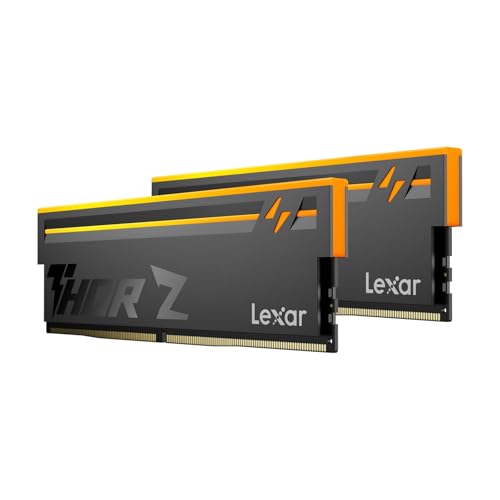
Lexar Thor Z RGB DDR5 RAM 32GB Kit (2x16GB) 6000MHz CL38 DRAM 288-Pin UDIMM
- High-Speed Performance: 6000MHz DDR5 RAM with low latency
- Large Capacity: 32GB (2x16GB) kit for multitasking
- Enhanced Thermal Design: Sandblasted aluminum heatsink for cooling
As an affiliate, we earn on qualifying purchases.
As an affiliate, we earn on qualifying purchases.
Current Market Conditions and Future Memory Trends
Memory prices surged due to supply chain issues and increased demand, with forecasts showing little relief before 2028. DDR5 has become the standard for new builds, with mainstream configurations at DDR5-6000 CL30 offering optimal performance. DDR4 is nearing end-of-life, and manufacturers have reduced its production, making it a poor choice for new systems. DDR6, announced as a future standard, will require new platforms and is not expected to be widely available until 2027 or later, with initial costs significantly higher than DDR5.
“DDR6’s new architecture and physical form factor will require entirely new platforms, making it unsuitable for immediate upgrade plans.”
— Hardware manufacturing sources
Unclear Timing and Cost of DDR6 Adoption
While DDR6 is expected to launch around 2026–27, precise timelines, pricing, and platform compatibility are still uncertain. The initial costs will be high, and widespread adoption may not occur until 2030, making early purchase risky for most consumers.
Next Steps for Building or Upgrading PCs
Consumers should focus on purchasing DDR5 memory, preferably DDR5-6000 CL30 kits, for upcoming builds or upgrades. Monitoring JEDEC standards and motherboard compatibility will help identify when DDR6 becomes viable, likely around 2027. Meanwhile, market conditions suggest avoiding DDR4 and delaying plans for DDR6 until it matures and prices stabilize.
Key Questions
Should I buy DDR4 now to save money?
No. DDR4 is nearing its end of life, and its prices are comparable to DDR5. Building with DDR4 now limits future upgrade options and may lead to higher costs later.
Is DDR6 worth waiting for?
For most users, no. DDR6 will be significantly more expensive initially and requires new platforms. It is better to buy DDR5 now and wait until DDR6 becomes affordable and mainstream, likely around 2027–2030.
What DDR5 configuration should I buy?
The recommended configuration is DDR5-6000 CL30, which offers the best balance of performance and price for most workloads through 2028.
When will DDR6 be compatible with current systems?
DDR6 will require new CPUs and motherboards. Compatibility with existing systems is not expected until at least 2027, with broad adoption possibly not until 2030.
What are the risks of early DDR6 adoption?
Early DDR6 kits may face stability issues, limited capacities, and high prices. It’s advisable to wait until standards are finalized and modules are tested for compatibility.
Source: ThorstenMeyerAI.com