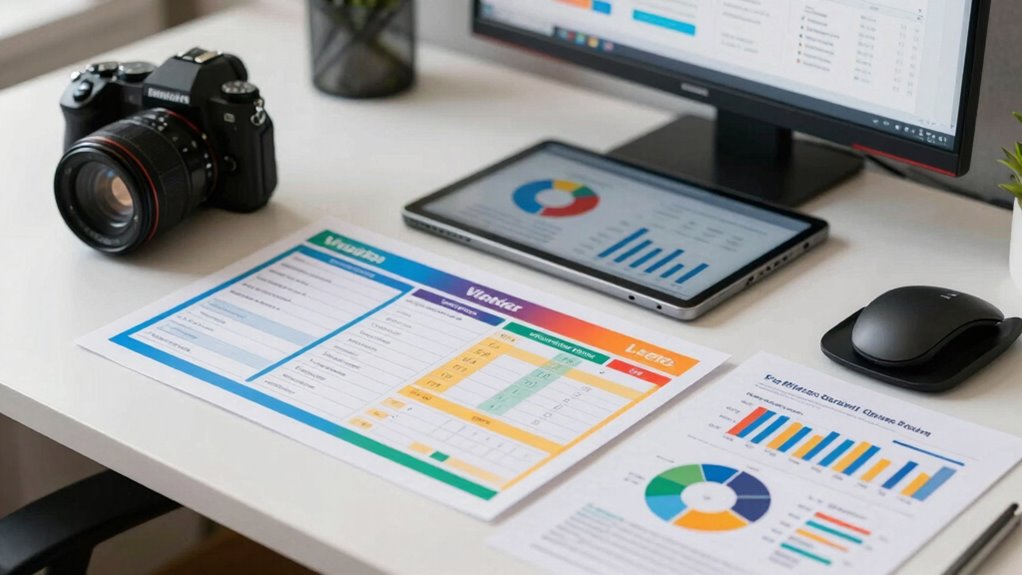

Vendor scorecards help small, lean teams track supplier performance quickly and efficiently. They highlight key metrics like delivery times, quality, responsiveness, and costs, allowing you to identify issues early and make informed decisions. By fostering transparency and accountability, scorecards strengthen supplier relationships and support strategic improvements. Using these tools, you can streamline operations, reduce risks, and promote ongoing supplier excellence. Keep exploring to discover how to tailor scorecards to your specific needs and maximize their benefits.
Key Takeaways
- Vendor scorecards streamline supplier evaluation, enabling small teams to monitor performance efficiently and make data-driven decisions.
- They highlight supplier strengths and weaknesses, supporting targeted improvements and stronger vendor relationships.
- Scorecards promote transparency and accountability, fostering trust and continuous improvement in small business partnerships.
- Using performance metrics like delivery, quality, and responsiveness helps small businesses manage risks and optimize procurement.
- Regular scorecard reviews enable lean teams to adapt strategies, reduce costs, and maintain supply chain resilience.
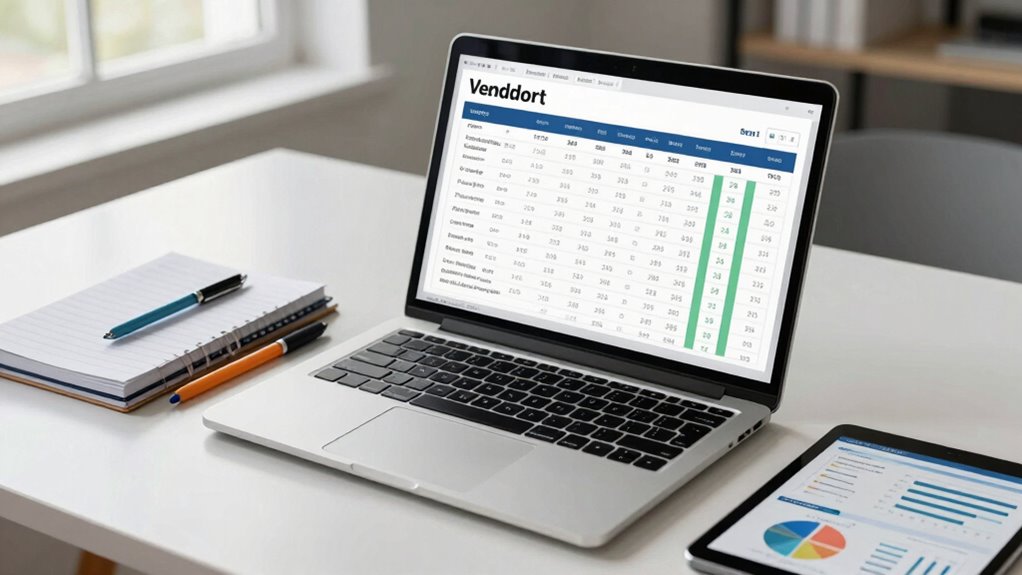
Implementing vendor scorecards can considerably boost your small business’s operational efficiency. When you actively monitor vendor performance through scorecards, you gain clear insights into how well your suppliers meet your expectations and requirements. This process simplifies supplier evaluation by providing concrete data, allowing you to make informed decisions about which vendors are adding value and which might need improvement or replacement. A well-structured scorecard keeps your team aligned on key metrics, helping you identify issues early and address them proactively.
Vendor scorecards enhance efficiency by providing clear data to evaluate supplier performance and address issues proactively.
By focusing on vendor performance metrics such as delivery times, quality standards, responsiveness, and cost management, you create a transparent system that highlights strengths and pinpoints weaknesses. This visibility enables you to hold vendors accountable, fostering a culture of continuous improvement. When you regularly review these scores, you’re better equipped to negotiate better terms, encourage vendors to enhance their services, and build stronger partnerships based on performance data rather than assumptions or anecdotal feedback. Additionally, understanding vendor reliability** can help you mitigate supply chain** disruptions and plan more effectively. Recognizing the importance of performance metrics ensures your evaluation process remains objective and actionable.
Supplier evaluation becomes more straightforward because scorecards streamline the process. Instead of relying on memory or scattered reports, you have a centralized, quantifiable view of each vendor’s contributions. This clarity helps you prioritize relationships with top-performing vendors and identify those that may require corrective action. Over time, this data-driven approach can lead to cost savings, increased reliability, and improved product or service quality, all of which are essential for small businesses aiming to compete effectively. Implementing data-driven decision making can further enhance the effectiveness of your evaluation process by ensuring all assessments are based on factual information. Embracing continuous improvement practices ensures that your supply chain remains adaptable and resilient in a changing market environment.
Additionally, vendor scorecards foster accountability within your team. When everyone understands the metrics used to evaluate vendors, it encourages consistent communication and collaboration. You can set clear expectations for vendors and hold them accountable for meeting specific targets. This transparency not only promotes fairness but also creates a foundation for constructive dialogue and ongoing improvements. As your team becomes more familiar with the scorecard system, you’ll find it easier to identify trends, adjust procurement strategies, and optimize your supply chain.
Incorporating design thinking principles into your vendor evaluation process can further enhance your ability to develop innovative solutions for supply chain challenges. In essence, adopting vendor scorecards helps you maintain a lean operation by focusing on what truly matters: performance, quality, and efficiency. They serve as practical tools to streamline your procurement process, reduce risks, and strengthen vendor relationships. For small businesses, where resources are limited and every dollar counts, implementing a structured vendor evaluation system enables smarter decisions, better supplier collaborations, and ultimately, a more agile and resilient operation.
Vendor Scorecards Made Simple: Master Vendor Evaluations and Drive Business Success
As an affiliate, we earn on qualifying purchases.
As an affiliate, we earn on qualifying purchases.
Frequently Asked Questions
How Often Should Vendor Scorecards Be Reviewed for Small Businesses?
You should review your vendor scorecards regularly, ideally every one to three months, depending on your business needs. This frequency allows you to monitor vendor evaluation and track scorecard metrics effectively. Consistent reviews help you identify performance issues early, make informed decisions, and strengthen vendor relationships. Staying proactive guarantees your supply chain remains efficient and aligned with your small business goals.
What Are Common Mistakes to Avoid When Creating Scorecards?
When creating scorecards, you should avoid relying solely on vendor feedback and focusing on a narrow set of scorecard metrics. Instead, guarantee your metrics are complete, measurable, and relevant to your goals. Don’t forget to gather balanced vendor feedback and regularly review and update your scorecard to reflect changing priorities. Avoid ambiguity in criteria, as clear expectations lead to better performance insights and improved vendor relationships.
How Can Small Businesses Ensure Scorecard Data Accuracy?
You realize that accurate scorecard data could be the difference between success and setbacks. To guarantee this, you perform data validation regularly, catching errors early. You also set clear performance benchmarks, making it easier to spot discrepancies. By maintaining diligent checks and aligning data with your benchmarks, you build trust in your scorecards. This vigilance keeps your small business agile, informed, and ready to adapt to any challenge.
What Tools Are Best for Tracking Vendor Performance?
You should use tools like Excel, Google Sheets, or specialized vendor management software to track vendor performance. These tools help you with vendor evaluation and monitoring performance metrics efficiently. They allow you to analyze data, identify trends, and make informed decisions. For small businesses, user-friendly options like Google Sheets or dedicated vendor scorecard platforms make tracking straightforward without needing extensive technical skills.
How to Handle Underperforming Vendors Identified Through Scorecards?
When you spot an underperforming vendor through your scorecard, don’t wait—act swiftly. Start with clear vendor communication, addressing the issues directly and seeking their perspective. If improvements aren’t made, consider contract renegotiation, setting new expectations and penalties. This proactive approach shows you’re serious about quality, and it can often motivate vendors to improve. If they don’t, be prepared to explore alternative vendors to protect your business.

A Comprehensive Guide to SAP Ariba Supplier Performance Management: Ariba’s SPM
As an affiliate, we earn on qualifying purchases.
As an affiliate, we earn on qualifying purchases.
Conclusion
By implementing vendor scorecards, you’re equipping your small business with a reliable compass to navigate supplier relationships. Think of these scorecards as your secret weapon—turning chaos into clarity and ensuring every partnership propels you forward. With consistent evaluation, you’ll spot opportunities for improvement and build stronger, more strategic alliances. Keep your scorecards sharp and your goals in sight, and watch your operations sail smoothly through even the stormiest seas.

POS Software – All in One Retail Point of Sale Software – Credit Card Processing – Store Management Features, 90 Days Money Back, Free Updates/e-mail Support/video Tutorials
Affordable POS Software
As an affiliate, we earn on qualifying purchases.
As an affiliate, we earn on qualifying purchases.

Vendor Scorecard Logbook: Record Supplier Performance | 8.5" x 11" | 106 blank templates
As an affiliate, we earn on qualifying purchases.
As an affiliate, we earn on qualifying purchases.