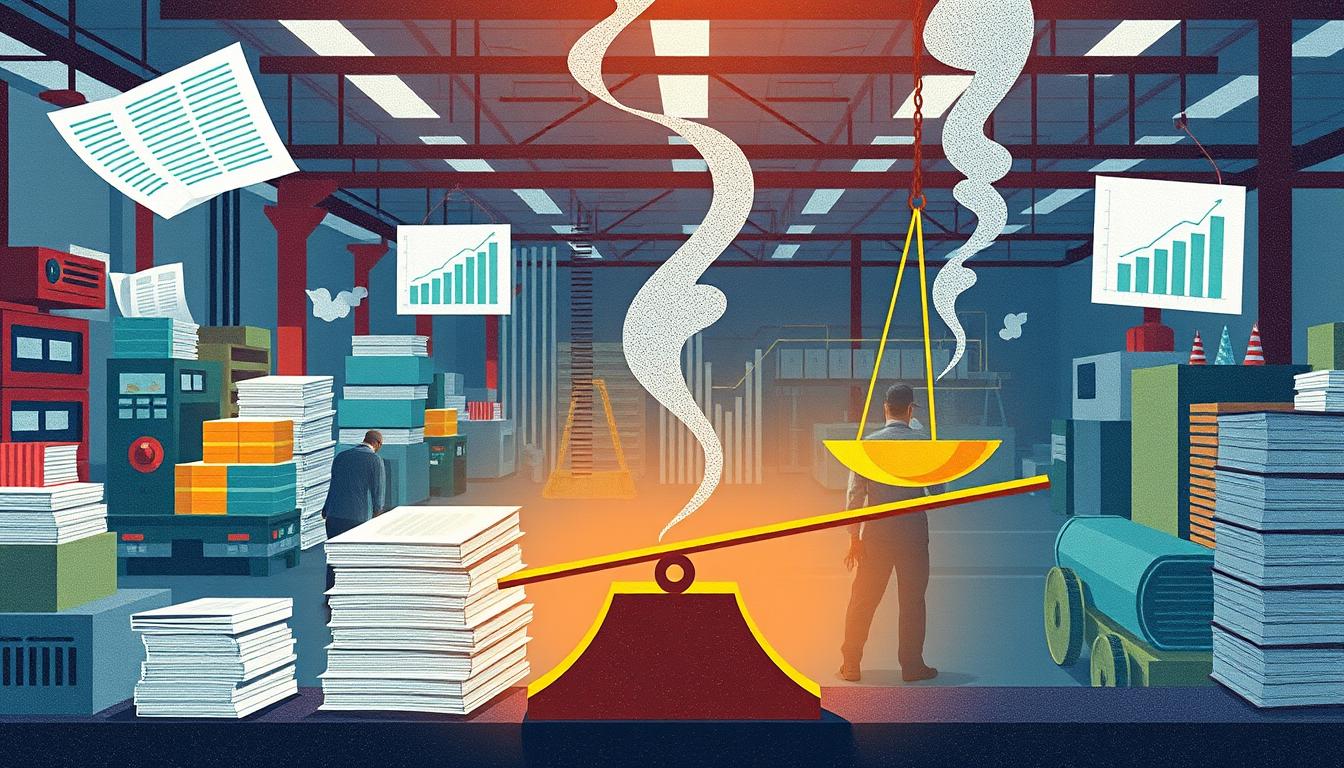
To prepare for economic shifts caused by inflation and interest rate changes, stay informed about central bank policies and economic indicators. Adjust your financial plans by locking in fixed-rate debt and building an emergency fund to weather market volatility. Diversify your investments to protect against inflation erosion, and monitor market trends carefully. Being proactive now can help you navigate upcoming changes smoothly—keep exploring to discover effective strategies for safeguarding your finances during uncertain times.
Key Takeaways
- Monitor central bank statements and economic indicators to anticipate upcoming rate changes and inflation trends.
- Diversify assets and maintain liquidity to reduce risk during periods of market volatility.
- Consider locking in fixed-rate debt and refinancing before interest rates rise.
- Invest in assets likely to outpace inflation, such as real estate or inflation-protected securities.
- Build and maintain an emergency fund to ensure financial stability amid economic shifts.
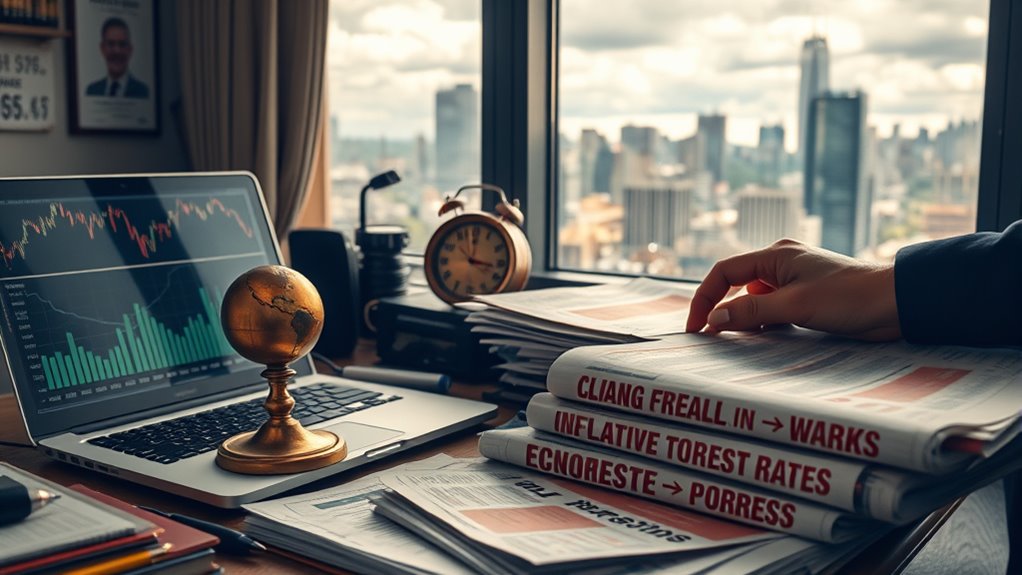
Are you ready to navigate the inevitable changes in the economy? Preparing for shifts in inflation and interest rates requires awareness of how monetary policy impacts the broader market. When central banks adjust their monetary policy, they influence everything from borrowing costs to consumer spending. These decisions can lead to increased market volatility, making it essential that you stay informed and adaptable.
Understanding how monetary policy works is your first step. When the central bank raises interest rates, borrowing becomes more expensive, which can slow economic growth and curb inflation. Conversely, lowering rates encourages borrowing and investment, spurring growth but risking higher inflation. These policy moves directly affect market stability, often resulting in sudden swings as investors react to new signals. Recognizing these patterns helps you anticipate potential fluctuations and prepare accordingly.
Central bank rate hikes slow growth; cuts boost borrowing, but both cause market volatility. Stay alert and adapt accordingly.
Market volatility tends to spike during periods of monetary policy adjustments. You might see sharp price swings in stocks, bonds, and commodities as investors digest the implications of rate changes. During these times, your investment portfolio can experience heightened risk, so it’s important to review your risk tolerance. Diversifying your holdings and maintaining a balanced asset allocation can buffer against unexpected downturns. Keep an eye on economic indicators and central bank communications—they often serve as early signals of upcoming policy shifts that could trigger volatility.
Being proactive means staying informed about the broader economic landscape. Follow central bank statements, economic reports, and financial news to gauge the direction of monetary policy. When you see hints of rate hikes or cuts, you can adjust your financial plans accordingly. For instance, if a rate increase is imminent, locking in fixed-rate debt or refinancing existing loans might save you money. Conversely, during periods of looser monetary policy, it could be advantageous to explore growth opportunities, knowing that borrowing costs may stay low for a while.
Preparing for these changes also involves managing your expectations. Inflation can erode purchasing power, so consider ways to protect your savings, such as investing in assets that tend to outpace inflation. Keep your debt levels manageable, especially if interest rates are expected to rise. Building an emergency fund is more *vital* than ever, providing a safety net during times of market turbulence and economic uncertainty.
Frequently Asked Questions
How Do Inflation and Interest Rates Impact Global Markets?
Inflation and interest rates directly impact global markets by causing currency fluctuations, which affect trade balances and investment flows. When interest rates rise, you might see higher borrowing costs, slowing wage growth and consumer spending. Conversely, low rates can boost economic activity but may also lead to currency devaluation. Staying aware of these shifts helps you anticipate market movements, manage risks, and capitalize on opportunities in an interconnected economy.
What Are Early Warning Signs of Economic Shifts?
Keep your eyes peeled for signs like increasing market volatility and falling consumer confidence, which act as early warnings of economic shifts. When markets become unpredictable or consumers pull back on spending, it’s a signal that change is on the horizon. These clues help you stay ahead of the curve, giving you time to adjust your plans before the storm hits. Trust your instincts and stay informed to navigate upcoming economic tides.
How Can Small Businesses Prepare for Changing Interest Rates?
To prepare for changing interest rates, focus on cash flow management to make certain your finances stay flexible. Review your expenses and boost savings where possible. Strengthen supplier negotiations to secure better terms and reduce costs, minimizing the impact of rate fluctuations. Keep a close eye on market trends and adjust your pricing strategies accordingly. Staying proactive helps you navigate interest rate changes with confidence and maintain business stability.
What Role Do Government Policies Play in Economic Transitions?
Government policies, like fiscal stimulus and regulatory changes, profoundly influence economic shifts. They can boost growth during downturns or tighten controls to prevent overheating. You should stay informed about these policies, as they can affect your business’s costs, demand, and opportunities. By adapting your strategies to new regulations or taking advantage of stimulus programs, you can better navigate economic shifts and maintain stability amid changing conditions.
How Do Inflation and Interest Rates Affect Personal Investment Strategies?
Inflation and interest rates are the winds that can steer your investment ship. When rates rise, bonds might become less attractive, so you shift towards stocks or real estate for better growth. High inflation erodes purchasing power, so diversifying your investments becomes essential for risk management. By adjusting your portfolio to these economic currents, you protect your wealth and navigate toward steady growth despite turbulent financial waters.
Conclusion
So, as you brace for these economic twists—rising inflation and climbing interest rates—you might find it amusing how planning now could save you later. Ironically, in a world obsessed with instant gains, it’s the cautious moves that actually secure your future. Stay vigilant, adapt quickly, and remember: sometimes, the best way to stay ahead is to prepare for what nobody sees coming. After all, fortune favors the prepared, even in unpredictable times.