
🔍 Read the full analysis: 10 Best Portable Power Stations For Versatile Use In 2027 on ThorstenMeyerAI.com

Get business pricing on office and shipping supplies
- Business-only prices and quantity discounts
- Tax-exempt purchasing
- Multiple users, one account, clear invoices
TL;DR
ThorstenMeyerAI.com’s 2027 guide compares 10 portable power stations for uses ranging from charging electronics to home backup. It identifies the Jackery Solar Generator 1000 v2 as its general-use pick, while stressing that product specifications and intended use matter more than a single overall ranking.
ThorstenMeyerAI.com’s 2027 buying guide compares 10 portable power stations for camping, electronics charging and backup power, naming the Jackery Solar Generator 1000 v2 its best overall choice for most users. The guide says buyers should weigh capacity, output, charging speed and portability against what they actually plan to run; its recommendations are editorial assessments, not independent product test results provided here.
The guide describes the Jackery Solar Generator 1000 v2 as a balance of 1,070 watt-hours (Wh) of capacity and 1,500 watts (W) of output, suited to camping and light home backup, much like other portable stations for camping and emergency backup. It calls the Jackery HomePower 3600 Plus a heavy-duty option, citing 3,600W output, and recommends the EF ECOFLOW DELTA 3 Ultra for users who place a premium on charging speed. The source does not provide the full specifications for either of those higher-capacity products.
For quicker recharging, the guide says the Anker SOLIX C1000 Gen 2 and EF ECOFLOW DELTA 3 Ultra can recharge in under an hour. That timing is a claim in the source guide; it does not specify test conditions, the charging method or the starting battery level. Smaller models have a different role: the MARBERO 88Wh and Jackery Explorer 300 are described as suitable mainly for electronics rather than high-wattage heating or cooking appliances.
The guide also highlights solar bundles, including the Jackery Solar Generator 1000 v2 and Jackery Solar Generator 300, as options with matched panels, a feature to consider when choosing a portable power station for a small business. It says bundled systems may simplify compatibility, while buyers of standalone stations should check solar-input limits and cable requirements. The supplied source names these models but does not identify all 10 picks or provide a complete ranked list with comparable prices and specifications.
The 10 picks
- 1
 Jackery HomePower 3600 Plus Portable Power Station, 3584Wh, 3600WView on Amazon →
- 2
 EF ECOFLOW DELTA 3 Ultra 3072Wh Portable Power StationView on Amazon →
- 3
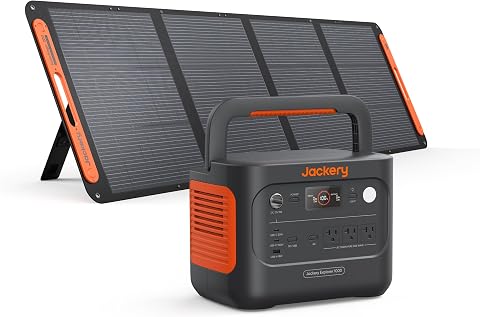 Jackery Solar Generator 1000 v2 with 200W Solar PanelView on Amazon →
- 4
 Anker SOLIX C1000 Gen 2 Portable Power Station with 200W Solar PanelView on Amazon →
- 5
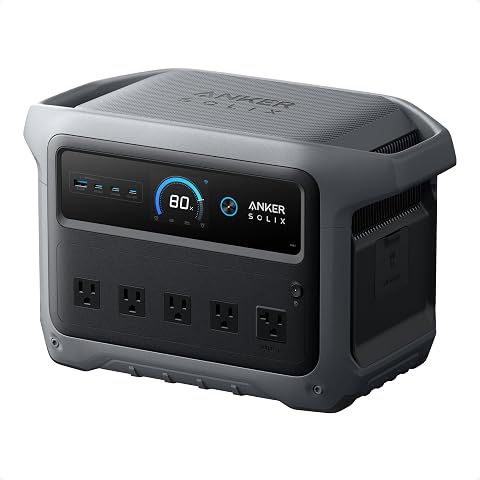 Anker SOLIX C1000 Gen 2 Portable Power StationView on Amazon →
- 6
 Jackery Explorer 1000 v2 Portable Power Station,1070Wh,1500WView on Amazon →
- 7
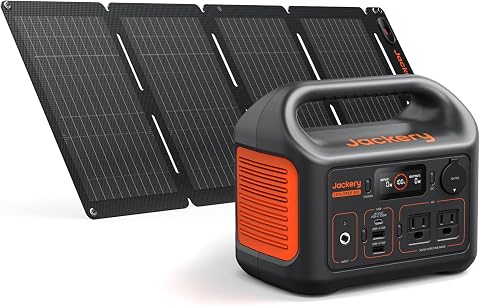 Jackery Solar Generator 300 and 40W Solar Panel,292Wh,300W ACView on Amazon →
- 8
 Jackery Explorer 300 Portable Power Station, 293Wh Lithium Battery, Solar Gen…View on Amazon →
- 9
 Anker SOLIX C300 DC Portable Power Station (288Wh, 300W)View on Amazon →
- 10
 MARBERO Portable Power Station 88Wh, 120W Surge, Solar Generator 24,000mAhView on Amazon →
Matching Power to Real-World Use
The list underscores a practical distinction: capacity and output measure different things. Watt-hours indicate how much energy a station stores; watts indicate how much power it can deliver at once. A model with a large battery may still be unable to start an appliance whose power demand exceeds the inverter’s output. Buyers planning to run a refrigerator or other appliance need to check both the rated load and any startup surge.
That tradeoff affects whether a station is useful for a particular job. A compact unit can be easier to carry for travel and useful for phones or a laptop, while a larger model may better suit vehicle-based camping or backup at home. The guide’s recommendations help frame those choices, but its rankings cannot replace checking a device’s own requirements or confirming a station’s limits.
Products Worth Considering

Apple MacBook Air 13.6-inch Laptop with M5 Chip, 16GB Memory, 512GB SSD, Midnight

Logitech MX Master 4 for Mac Wireless Ergonomic Mouse, White Silver

Logitech MX Mechanical Wireless Illuminated Keyboard, Clicky Switches
As an affiliate, we earn on qualifying purchases.
How the Guide Compares Models
ThorstenMeyerAI.com says it assessed stations on capacity, output power, recharge speed and build quality, with versatility influencing its ranking. It also says it compared standalone units with solar bundles and excluded products it judged to have poor thermal management or non-standard charging ports. The supplied material does not describe the testing process, name specific measurements taken, or provide evidence for those exclusions.
The guide treats battery chemistry and portability as additional buying considerations. It presents LiFePO4 chemistry as a longer-cycle option and cautions that weight generally rises with capacity. Its specific cycle-life figures are not accompanied by manufacturer documentation or test results in the source material, so readers should check the product’s published warranty and specifications before relying on them.
“The Jackery Solar Generator 1000 v2 stands out as the best overall pick for most users.”
— ThorstenMeyerAI.com’s buying guide
Testing and Full Rankings Missing
The source material does not give the complete set of 10 products, a full ranked list, prices, weights or consistent specifications for each model. It also does not explain whether the recommendations come from hands-on testing, manufacturer data or another evaluation method. Charging times, battery-cycle claims and judgments about reliability therefore remain attributed to the guide rather than independently verified here.
It is also unclear which configurations the cited specifications refer to, since product performance can vary by model version, region, accessories and charging conditions. Readers should confirm current manufacturer specifications, including inverter output, surge capacity, solar input, battery chemistry and charging time, before buying.
Verify Specs Before Purchase
The immediate next step for shoppers is to compare the complete model list and current specifications against their intended devices and budget. Check how long equipment must run, its normal and startup power draw, the station’s usable capacity, and whether charging will come from a wall outlet, a vehicle or solar panels. For home backup, confirm which appliances can be powered together and whether the unit is designed for that role.
Because the source is a buying guide rather than a product announcement, it does not identify a forthcoming launch or later update. Prices, model availability and performance claims may change; prospective buyers should check manufacturer listings and retailer details at the time of purchase.
Key Questions
Which station does the guide recommend for most users?
ThorstenMeyerAI.com names the Jackery Solar Generator 1000 v2 as its overall pick, citing 1,070Wh capacity and 1,500W output. That is the guide’s assessment, not a universal recommendation for every use.
Can a small power station run a refrigerator or cooking appliance?
It depends on the appliance’s running and startup power and the station’s inverter output. The guide says the MARBERO 88Wh and Jackery Explorer 300 are mainly for electronics and are not suited to high-wattage heating or cooking appliances.
Which models are described as fast-charging?
The guide says the Anker SOLIX C1000 Gen 2 and EF ECOFLOW DELTA 3 Ultra recharge in under an hour. It does not state the testing conditions or charging method, so buyers should verify the claim for the configuration they are considering.
What should buyers check before choosing a station?
Compare capacity in watt-hours with output in watts, then check appliance startup demands, weight, charging options and solar-input limits. Manufacturer specifications and the buyer’s own use case should take priority over a general ranking.
Source: ThorstenMeyerAI.com