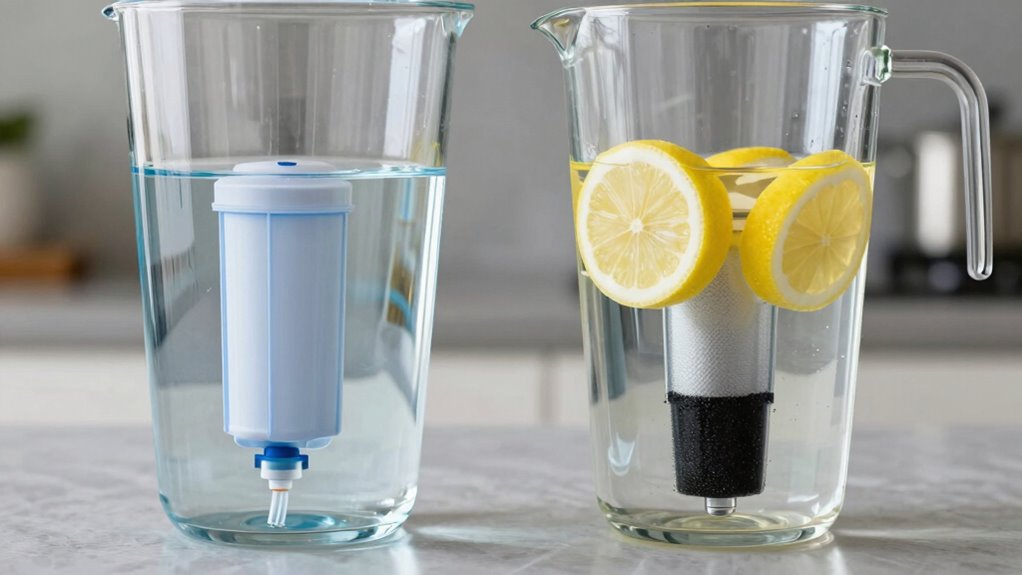
Choosing between reverse osmosis and carbon filters depends on your water quality needs and maintenance willingness. RO systems excel at removing dissolved solids, heavy metals, and salts but can lower water pH and waste more water during filtration. Carbon filters effectively improve taste and odors by adsorbing chlorine and organic compounds, though they don’t remove dissolved salts. To find the best fit for your home and learn about combining systems, more details are just ahead.
Key Takeaways
- Reverse osmosis effectively removes dissolved solids and heavy metals, while carbon filters excel at odor and chemical removal.
- Combining both systems can provide comprehensive filtration but may increase maintenance and costs.
- RO systems tend to lower water pH and remove beneficial minerals, impacting taste and health benefits.
- Carbon filters are less effective against dissolved salts and heavy metals, limiting their scope.
- The best choice depends on specific water contaminants, maintenance willingness, and budget considerations.

iSpring RCC7AK, NSF Certified, 75 GPD, Alkaline 6-Stage Reverse Osmosis System, pH+ Remineralization RO Water Filter System Under Sink, Patented Top-Mounted Faucet Design for Easy Installation
PATENTED DESIGN – The top-mounted fastener allows for easy countertop installation entirely from above, eliminating the hassle of…
As an affiliate, we earn on qualifying purchases.
As an affiliate, we earn on qualifying purchases.
How Do Reverse Osmosis and Carbon Water Filters Work?
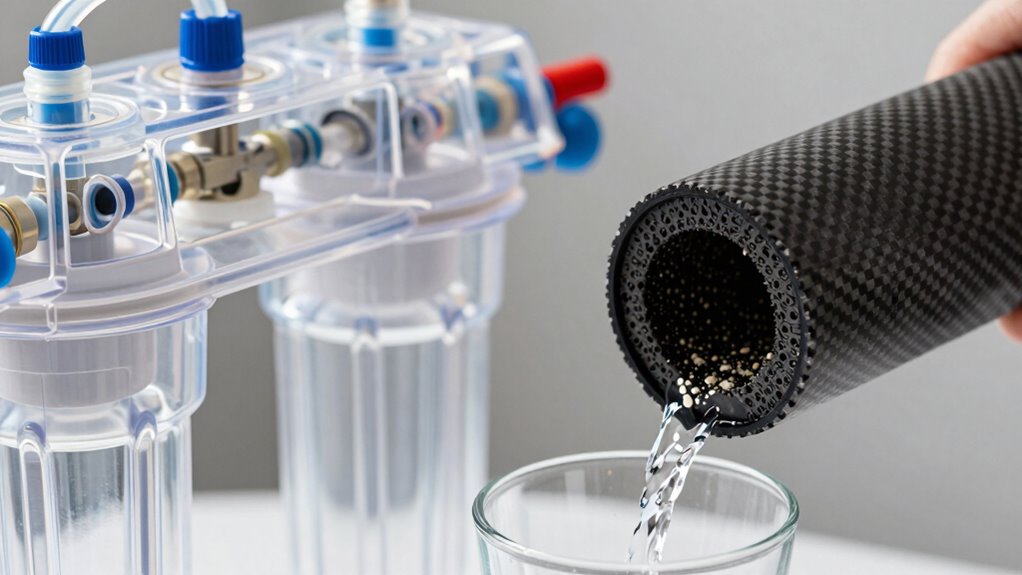
Both reverse osmosis and carbon water filters use different methods to remove contaminants from your drinking water. Reverse osmosis works by forcing water through a semi-permeable membrane, which traps impurities and prevents them from passing through. This process often improves the water taste by removing minerals and chemicals that cause off-flavors. On the other hand, carbon filters use activated carbon to adsorb contaminants directly onto its surface. This method is especially effective for reducing chlorine, odors, and organic compounds, enhancing water taste. The filter lifespan varies: carbon filters typically need replacement every 3 to 6 months, while reverse osmosis membranes last longer but require more maintenance. Both systems offer unique advantages, depending on your water quality and taste preferences, and understanding these water purification methods can help you choose the best system for your needs. Additionally, considering the technology differences can ensure you select a system that effectively addresses the specific contaminants present in your water supply.

1 Micron 2.5" x 10" Whole House CTO Carbon Water Filter Cartridge Replacement for Under Sink Water Filter System, Dupont WFPFC8002, WFPFC9001, FXWTC, SCWH-5, WHEF-WHWC, WHCF-WHWC, AMZN-SCWH-5, 4Pack
❄️【Authoritative Certifications】 – The filter is certified against NSF/ANSI 42 by IAPMO, filtering out 99% Chlorine, odor and…
As an affiliate, we earn on qualifying purchases.
As an affiliate, we earn on qualifying purchases.
What Contaminants Do RO and Carbon Filters Remove Best?

Reverse osmosis is highly effective at removing a wide range of contaminants, especially dissolved solids like salts, heavy metals, and minerals that can affect water taste and safety. It markedly reduces substances such as lead, arsenic, and nitrates, while also improving pH balance by lowering acidity. However, it tends to strip away beneficial minerals, impacting mineral retention. Carbon filters excel at removing chlorine, volatile organic compounds (VOCs), and pesticides, which directly influence taste and odor. They’re less effective against dissolved salts and heavy metals but preserve minerals and pH balance better. Here’s a quick comparison:
| Contaminant Type | Best Removed By | Notes |
|---|---|---|
| Heavy Metals | Reverse Osmosis | Removes lead, mercury, arsenic |
| Chlorine & Odors | Carbon Filters | Improves taste and smell |
| Dissolved Salts & Minerals | Reverse Osmosis | Removes salts, impacts mineral retention |
| VOCs & Pesticides | Carbon Filters | Effective for organic compounds |
| pH Balance | Neither (requires adjustment) | Both may alter pH, often need rebalancing |
iSpring RCC7AK, NSF Certified, 75 GPD, Alkaline 6-Stage Reverse Osmosis System, pH+ Remineralization RO Water Filter System Under Sink, Patented Top-Mounted Faucet Design for Easy Installation
PATENTED DESIGN – The top-mounted fastener allows for easy countertop installation entirely from above, eliminating the hassle of…
As an affiliate, we earn on qualifying purchases.
As an affiliate, we earn on qualifying purchases.
Pros and Cons of Reverse Osmosis Water Systems
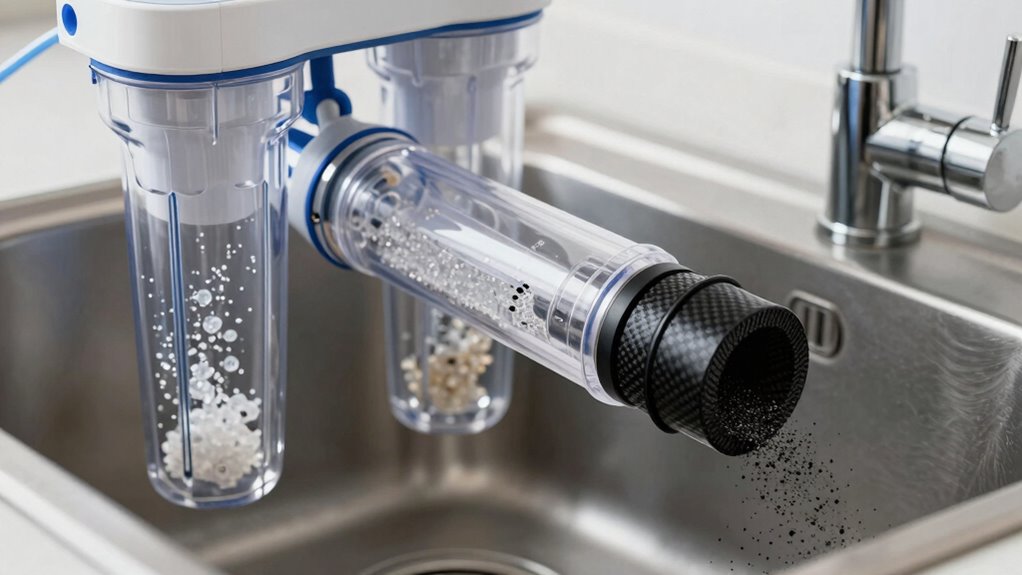
Reverse osmosis (RO) systems offer a highly effective way to improve water quality, but like any filtration method, they come with advantages and drawbacks. One major benefit is their ability to considerably reduce contaminants, providing cleaner, safer drinking water. However, RO systems tend to lower water pH, making the water slightly more acidic, which might not suit everyone’s taste or health needs. Additionally, their filter longevity can be limited, requiring regular maintenance and filter replacements to keep performance at its best. This ongoing upkeep can be costly and time-consuming. On the downside, some users find the process wastes a notable amount of water, and the mineral removal can affect taste and health benefits. Proper gear care and maintenance can extend filter life and optimize performance. Understanding the water filtration process can help you make informed decisions about which system best fits your needs. Being aware of environmental impact can also influence your choice if sustainability is a concern. It’s important to consider how these systems fit into your overall water management strategy to ensure you select the most suitable option. For example, knowledge of the microplastics in dust can be relevant when considering the broader impact of water filtration choices. Weighing these pros and cons helps you decide if an RO system suits your needs.

ICEPURE 10"X4.5",1 Microns Whole House Sediment Activated Carbon Water Filter Compatible with Dupont WFHDC8001,EP Series,EPM Series,CB-BB-10, GE FXHTC, GXWH40L, GXWH35F, GNWH38S, CTO10BB,3PACK
Authoritative Certifications – Tested and certified by IAMPO against NSF/ANSI 42 to reduce 99.06% Chlorine. Reduce sand, sediments,…
As an affiliate, we earn on qualifying purchases.
As an affiliate, we earn on qualifying purchases.
Benefits and Drawbacks of Carbon Water Filters
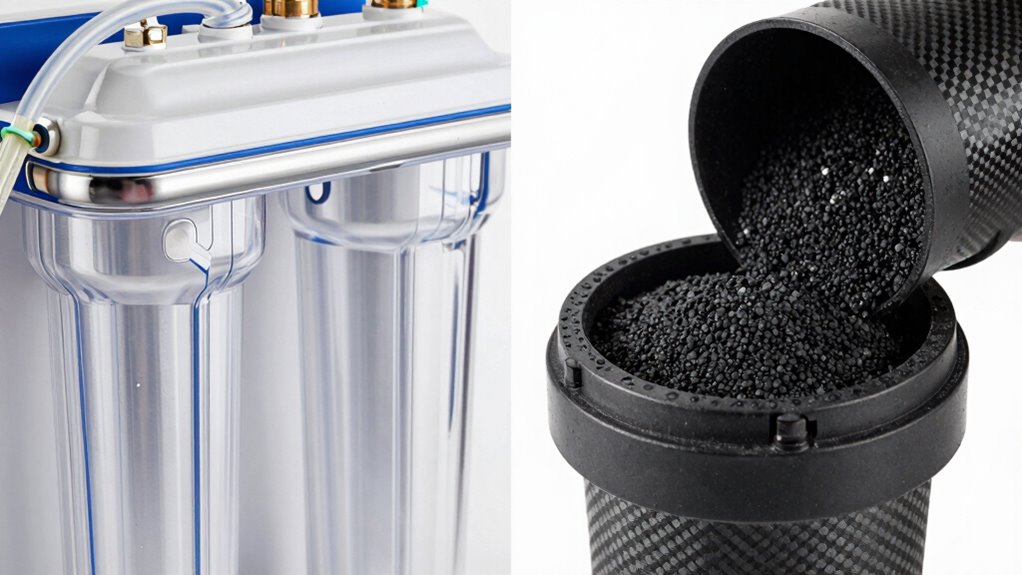
Carbon water filters are popular because they effectively remove chlorine, bad tastes, and odors from your drinking water. They improve water quality by adjusting water pH levels, making it more neutral and palatable. However, they have limitations, such as not removing dissolved solids or heavy metals. Proper filter installation is crucial to guarantee maximum performance and avoid leaks. Keep in mind that over time, carbon filters can become less effective, requiring regular replacement. Additionally, some contaminants may pass through if the filter isn’t rated for specific toxins. Regular maintenance and understanding the types of filters available can help you choose the most suitable option for your water needs. Being aware of home design and architecture details, like proper filter placement, can also extend the lifespan and efficiency of your filtration system. According to the subtopic 2: Lifestyle for Longevity principles, maintaining a healthy environment around your filtration system can contribute to overall health. Furthermore, knowing the limitations of carbon filters ensures you select the right filtration system for comprehensive water treatment.
How to Choose the Right Water Filter for Your Home

When selecting a water filter, consider the types of contaminants in your water and how well different filters remove them. Think about the maintenance required and how much the system will cost over time. Balancing these factors will help you choose the best option for your home’s needs.
Water Contaminant Types
Understanding the types of water contaminants present in your supply is essential for choosing the right filter. Different contaminants require specific filtration methods, and identifying them helps you avoid unnecessary costs or aesthetic concerns. Common contaminants include bacteria, heavy metals, chlorine, and sediments. Each impacts water quality differently and influences filter performance. For instance, carbon filters excel at removing chlorine and organic compounds, improving taste and odor, while reverse osmosis systems are better suited for heavy metals and dissolved solids. Keep in mind potential installation challenges, especially with under-sink or whole-house setups, which can affect aesthetics and space. Properly evaluating your water’s contaminant profile ensures you select a filter that effectively addresses your needs without compromising your home’s aesthetics or complicating installation. Additionally, understanding pressure cooker tips can be useful if you consider alternative filtration methods or appliances that impact water pressure.
Maintenance and Cost
Choosing the right water filter involves balancing maintenance requirements and overall costs to fit your budget and lifestyle. Reverse osmosis systems often have higher upfront costs and can present installation challenges, especially if plumbing needs modifications. They also require regular membrane and filter replacements, which can add to ongoing expenses. Carbon filters generally cost less initially and are easier to install, but they need frequent filter changes to stay effective. Consider the environmental impacts of each option—RO systems typically waste more water during filtration, while carbon filters produce less waste but may require disposal of used filters. Additionally, understanding the water filtration process can help you select the most suitable system for your needs. Regular maintenance practices, such as aeration, can extend the lifespan of your filters and improve efficiency. For example, incorporating water testing can help monitor water quality and ensure your chosen system continues to perform optimally. Overall, your choice depends on how much maintenance you’re willing to handle and the long-term costs you’re prepared for, ensuring your selected system aligns with your budget and sustainability goals. Incorporating holistic SEO strategies such as content relevance and user experience can help you make a more informed decision.
Should You Combine Reverse Osmosis and Carbon Filters?
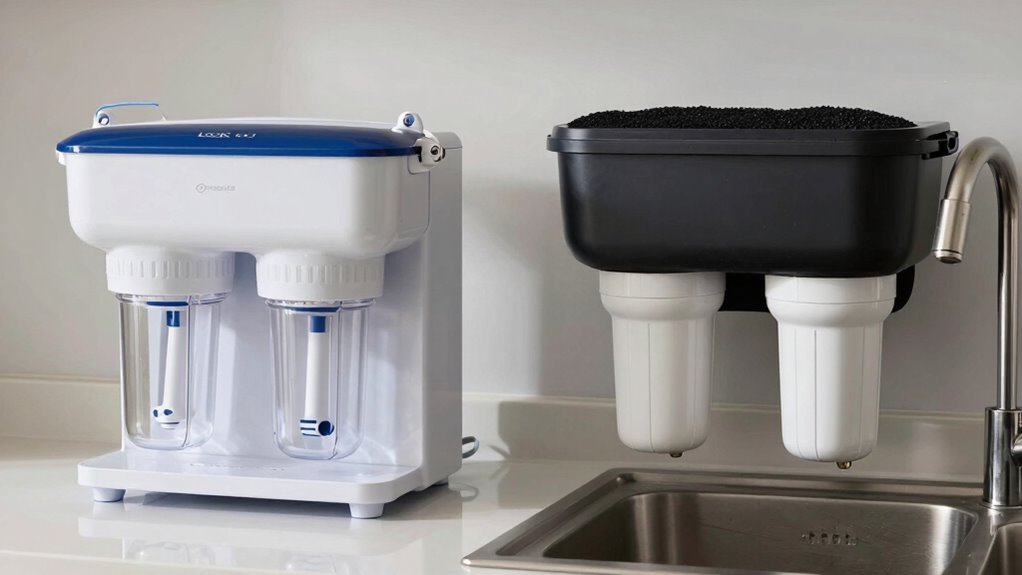
Combining reverse osmosis (RO) and carbon filters can effectively enhance your water quality by targeting a broader range of contaminants. This setup often improves taste, odor, and removes chemicals that a single filter might miss. However, consider factors like filter lifespan and installation requirements. Dual systems may demand more frequent filter replacements, increasing maintenance. Proper installation can be complex, often requiring professional assistance to ensure ideal performance. Additionally, regular updates on water treatment regulations can help you stay informed about best practices and new filtration standards. It’s also important to consider filter compatibility to avoid potential system issues.
In addition, understanding the different filtration technologies involved can help optimize your system’s efficiency and longevity. Deciding whether to combine these filters depends on your water quality needs and willingness to manage added complexity. Combining systems can be beneficial but requires balancing improved purification with ongoing upkeep. Incorporating proper maintenance routines can further extend the lifespan of your filters and ensure consistent water quality.
Frequently Asked Questions
How Long Do Reverse Osmosis and Carbon Filters Typically Last?
You can expect reverse osmosis filters to last about 2-3 years, while carbon filters typically last 6-12 months. This impacts filtration efficiency, as longer-lasting filters maintain better performance over time. When considering cost comparison, reverse osmosis systems tend to be more expensive upfront but last longer, whereas carbon filters are cheaper initially but need frequent replacements. Regular maintenance guarantees peak filtration efficiency for both options.
Are There Health Risks Associated With Using Either Filter Type?
Did you know that poorly maintained filters can harbor bacteria? Health concerns are minimal if you regularly replace reverse osmosis and carbon filters, as they effectively remove common contaminants. However, if filters aren’t changed on time, they might become breeding grounds for bacteria or release trapped contaminants back into your water. Proper maintenance guarantees safe drinking water, reducing health risks and optimizing contaminant removal.
What Is the Maintenance Cost Difference Between RO and Carbon Filters?
You’ll find that reverse osmosis systems generally have higher maintenance costs due to their filter lifespan, which typically requires more frequent replacements. Carbon filters tend to be cheaper and easier to maintain. However, consider the environmental impact—RO systems waste more water during filtration, affecting ongoing costs. While both need regular maintenance, your choice impacts long-term expenses and environmental footprint, so weigh these factors carefully when deciding.
Can Reverse Osmosis Remove Beneficial Minerals From Water?
While reverse osmosis is highly effective at mineral removal, it can subtly influence the water’s taste, leading to a sense of diminished complexity. You should know that it does remove beneficial minerals, which might impact flavor and health benefits. If maintaining mineral content matters to you, consider supplementing your water or choosing a system that balances purification with mineral retention. This way, you enjoy cleaner water without sacrificing taste or nutrition.
Which Filter Type Is More Environmentally Friendly?
You’ll find that carbon filters are generally more environmentally friendly because they require less energy and produce less waste compared to reverse osmosis systems. Carbon filters have sustainability benefits since they use natural adsorption processes, and their replacement is simple. Reverse osmosis, while effective, consumes more water and energy, impacting its eco-friendly impact. For a greener choice, opt for carbon filters to reduce your environmental footprint while maintaining water quality.
Conclusion
Choosing between reverse osmosis and carbon filters depends on your water quality needs. Both have their strengths and weaknesses, and sometimes, a wise person from the court of King Solomon would recommend combining them for maximum purity. Remember, there’s no one-size-fits-all solution—consider your specific contaminants and preferences. With the right choice, you’ll enjoy clean, invigorating water that’s as essential as the air you breathe, just like the wisdom passed down through ages.